Physical Education (048)
Class XI (2024-25)
Time Allowed: 3 hours Maximum Marks: 70
General Instructions:
1. The question paper consists of 5 sections and 37 Questions.
2. Section A consists of question 1-18 carrying 1 mark each and is multiple choice questions. All questions are compulsory.
3. Sections B consist of questions 19-24 carrying 2 marks each and are very short answer types and should not exceed 60-90 words. Attempt any 5.
4. Sections C consist of Question 25-30 carrying 3 marks each and are short answer types and should not exceed 100-150 words. Attempt any 5.
5. Sections D consist of Question 31-33 carrying 4 marks each and are case studies. There is internal choice available.
6. Section E consists of Question 34-37 carrying 5 marks each and are short answer types and should not exceed 200-300 words. Attempt any 3.
SECTION A
1. Which of the following is not a career option in the performance-related sector?
a) Sports management
b) Sports Dietician
c) Professional players
d) Sports planning officers
View AnswerAns. b) Sports Dietician
2. Who was the first president of the International Olympics Committee?
a) Demetrius Vikelas
b) Dorabji Tata
c) Pierre, Baron De Coubertin
d) Charles Dickens
View AnswerAns. a) Demetrius Vikelas
3. The human heart is a ________ chambered muscular organ.
a) four
b) three
c) six
d) two
View AnswerAns. a) four
4. Which component of Wellness refers to As the ability to work with different people, to communicate well and interact with the community
a) Intellectual Wellness
b) Social Wellness
c) Environmental Wellness
d) Emotional Wellness
View AnswerAns. b) Social Wellness
5. Assertion (A): Shavasana and Makarasana are the main relaxative asanas.
Reason (R): An individual gets complete relaxation after performing these asanas.
a) Both A and R are true and R is the correct explanation of A.
b) Both A and R are true but R is not the correct explanation of A.
c) A is true but R is false.
d) A is false but R is true.
View AnswerAns. a) Both A and R are true and R is the correct explanation of A.
6. According to WHO what is a healthy WHR?
a) 0.85 or less for women. 0.9 or less for men.
b) 0.90 or less for women. 1.00 or less for men.
c) 0.90 or more for women. 0.95 or more for men.
d) 0.85 or more for women. 0.9 or more for men.
View AnswerAns. a) 0.85 or less for women. 0.9 or less for men.
7. ________ is a balance between work and leisure.
a) Occupational Wellness
b) Physical Wellness
c) Environmental Wellness
d) Spiritual Wellness
View AnswerAns. a) Occupational Wellness
8. Identify the given concept:
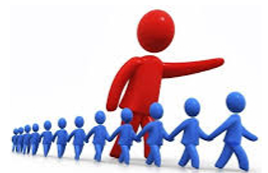
a) Leadership
b) Teamwork
c) Guidance
d) Teaching
View AnswerAns. a) Leadership
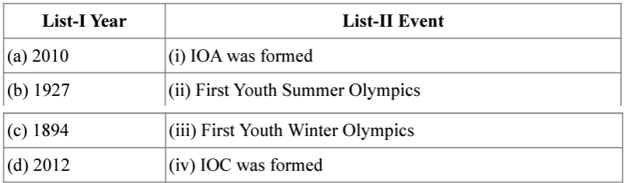
9. Match List-I with List-II and select the correct answer from the code given below:
a) (a) – (ii), (b) – (iv), (c) – (i), (d) (iii)
b) (a) – (iii), (b) – (ii), (c) – (i), (d)- (iv)
c) (a) – (ii), (b) – (iv), (c) – (iii), (d)- (i)
d) (a) – (ii), (b) – (i), (c) – (iv), (d) (iii)
View AnswerAns. d) (a) – (ii), (b) – (i), (c) – (iv), (d) (iii)
10. Assertion (A): Anabolic Steroids are banned substances.
Reason (R): The side effects associated with anabolic androgenic steroids are extremely serious and are divided into general, male specific and female specific.
a) Both A and R are true and R is the correct explanation of A.
b) Both A and R are true but R is not the correct explanation of A.
c) A is true but R is false.
d) A is false but R is true.
View AnswerAns. a) Both A and R are true and R is the correct explanation of A.
11. The professionals who help people to improve their ability to perform tasks in their daily living and working environment are
a) Chiropractors
b) Sports officers
c) Occupational therapists
d) Physical education teachers
View AnswerAns. c) Occupational therapists
12. Blood doping increases the number of ________.
a) Plasma
b) RBCs
c) WBCs
d) Skin cells
View AnswerAns. b) RBCs
13. What is the full form of IOA?
a) Indian Oztag Association
b) International Olympic Association
c) International Office Administration
d) Indian Olympic Association
View AnswerAns. d) Indian Olympic Association
14. The aim of adaptive physical education is to help whom?
a) Youth
b) Athelets
c) Adults
d) Differently abled students
View AnswerAns. d) Differently abled students
15. Prana in Pranayam means:
a) Promise
b) Treasure
c) Life force
d) Plan
View AnswerAns. c) Life force
16. Biomechanics can play a crucial role in
a) physical movement
b) Both injury prevention and performance enhancement
c) injury prevention
d) performance enhancement
View AnswerAns. b) Both injury prevention and performance enhancement
17. Which of these is not a value of Olympics?
a) Excellence
b) Team spirit
c) Respect
d) Friendship
View AnswerAns. b) Team spirit
18. Biomechanics deals with:
a) To understand the physiology of the body
b) To understand Time & Distance concept of Various Movements
c) Muscles involved in Movement
d) Effect of force on Different Movements done by the human body
View AnswerAns. d) Effect of force on Different Movements done by the human body
SECTION B
Attempt any 5 questions
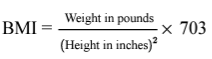
19. What is the formula for calculating BMI in the FPS system?
View AnswerAns.
20. Explain the meaning of physical education with definition.
View AnswerAns. According to R Cassidy, “Physical education is the sum of the changes in the individual caused by experiences involving motor activities.”
21. What is heart rate?
View AnswerAns. It is the number of pumping/contractions of heart in one minute. It is about 72 times per minute under normal conditions in an adult.
22. What is the role of biceps in running?
View AnswerAns. Biceps also play a vital role in running. Biceps maintain a bent arm and help in swinging your arms back and forth while running.
23. What is the objective of adaptive physical education?
View AnswerAns. The primary goal of adaptive physical education should be to ensure that the child is provided with physical education services that meet his/her unique needs. The most important objective of APE is development of the student’s motor skills. Adaptive physical education programmes strive to ensure that each student actively participates in physical education programmes at his or her own level and that the student is integrated into the regular physical education programme whenever possible.
24. Define Interval Training.
View AnswerAns. Interval Training Method: This training method is very useful for the development of endurance. This training method is based on the principle ‘effort and recovery’ and effort again.
For example: 250 metres sprint 150 metres walk, 250 metres sprint 150 metres walk. This 150 metres walk or Jog before the next repetition is called interval between specified workout.
SECTION C
Attempt any 5 questions
25. Elaborate Sheldon’s classification of body type.
View AnswerAns. Ectomorphs are long and lean, with little body fat, and little muscle. They have a hard time gaining weight. Fashion models and basketball players fit this category While most of us love to hate these genetically-blessed individuals, some male ectomorphs may not be thrilled with their narrow- chested frames, and some female ectomorphs long for more womanly curves.
Endomorphs, on the other hand, have lots of body fat, and lots of muscle, and gain weight easily. They’re heavier and rounder individuals.
Mesomorphs are athletic, solid, and strong. They’re not overweight and not underweightand they can eat what they want without worrying too much about it. They both gain and lose weight without too much effort.
26. Enlist the major muscles involved in running and explain any one.
View AnswerAns. The major muscles involved in running are described below:
a. Glutes
b. Quads
c. Calves
d. Hamstrings
e. Core muscles
f. Biceps: biceps also play a vital role in running. Biceps maintain a bent arm and help in swinging your arms back and forth while running.
27. Explain different types of flexibility?
View AnswerAns. Flexibility is of two types: (i) Passive flexibility (ii) Active flexibility.
i. Passive flexibility: It is the ability to perform movements with greater. amplitude with external help is passive flexibility. e.g., Stretching exs. with the help of partner. Passive flexibility is always greater than active flexibility because with the help of partner stretching of muscles, ligaments and joint structure takes place slowly with holding method.
ii. Active flexibility: It is the ability to do movements with greater amplitude without external help is called active flexibility. Active flexibility is of two types; static and dynamic. Static flexibility is required while standing, sitting or lying. Dynamic flexibility is required for executing movements with greater amplitude when the sportsman is moving. Both flexibilities depend on motor coordination.
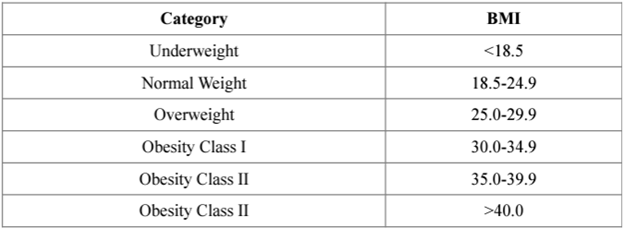
28. What do you mean by BMI? Write down the scale of BMI.
View AnswerAns. BMI is a statistical measurement that let us know whether the person is underweight, normal weight or overweight.
BMI is categorized as below:
29. Differentiate Kinetics and Kinematics.
View AnswerAns. Kinetics: Kinetics is an important aspect of sports performance, as it is involving the study of the forces and movements involved in athletic performance. Athletes use their kinematic and kinetic knowledge to optimize their movement patterns and mechanics which helps them to enhance their performance.
Kinematics: Kinematics is the study of motion, and it plays an important role in sports. In sports, kinematics is used to analyze the motion of athletes and equipment to understand their performance and improve their techniques. One important application of kinematics in sports is the study of movement patterns. This includes analyzing the movement of body segments, such as arms and legs, dining sports movements such as throwing, jumping, and running. By understanding the kinematics of these movements, athletes and coaches can identify areas for improvement in technique, leading to greater efficiency and reduced risk of injury.
30. Adolescence is the age of stress and strain. Explain.
View AnswerAns. Adolescence is the age of stress and strain. The period of passage from childhood to adulthood is a time of dramatic physical, cognitive and social changes. The early adolescence is called the age of awkwardness in physical appearance due to rapid and disproportionate growth in size, shape, height and weight. They are naturally more preoccupied about their physical appearance. Psychologically, this is a period of adjustment to the physical and social changes which distinguish childhood behaviour from adult behaviour. The variation in body build-up becomes a source of disturbance to many adolescents. In this stage, the adolescents try to solve various kinds of issues on their own. Because of not finding the right solution, they may take a wrong decision which can create a lot of stress or mental problem.
Pressure of studies, result of competitive exams, goal setting and achieving it through hard phases of life can also cause a lot of stress and tension to adolescents. They undergo lot of changes in mood, get easily irritated, when they desire for independence but are not given, results in emotional disturbances, etc.
SECTION D
MR. Rajesh, manager of Sports Company has decided to produce sports material of good quality. He was succeeding in producing few materials
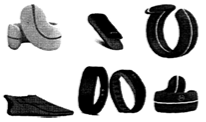
Look at the image carefully.
1. ________ is shown in the above image.
A. Sports Equipment
B. Wearable Gear
C. Fitness Apps
D. Training Tools
View AnswerAns. B. Wearable Gear
2. The sports industry is making ________ with wearable technology by each passing day.
A. advances
B. setbacks
C. mistakes
D. delays
View AnswerAns. A. advances
3. It has ________ profits.
A. moderate
B. negligible
C. uncountable
D. minimal
View AnswerAns. C. uncountable
4. It can be used to prevent ________ by indicating the danger zone.
A. fatigue
B. dehydration
C. stress
D. injuries
View AnswerAns. D. injuries
32. Priyanshi asked her father about the Olympics; he told her that the Olympics are divided into two parts Ancient and Modern.

Look at the picture carefully.
1. The Modern Olympics was introduced at ________.
A. 1900
B. 1896
C. 1892
D. 1924
View AnswerAns. C. 1892
2. It was introduced by ________.
A. Thomas Bach
B. Pierre de Coubertin
C. Avery Brundage
D. Baron de Coubertin
View AnswerAns. B. Pierre de Coubertin
3. ________ is the committee for the Modern Olympics.
A. International Olympic Committee
B. International Sports Federation
C. Olympic Organizing Committee
D. National Olympic Association
View AnswerAns. A. International Olympic Committee
4. Competitions are held after every ________ years.
A. 2
B. 3
C. 5
D. 4
View AnswerAns. D. 4
33. In relation to the given picture, answer the following questions.
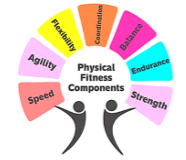
1. The ability to maximum turn and twist on the joints of the body is ________.
A. Flexibility
B. Agility
C. Coordination
D. Balance
View AnswerAns. A. Flexibility
2. The ability to perform maximum efforts in a short period of time is known as ________.
A. Endurance
B. Strength
C. Power
D. Speed
View AnswerAns. C. Power
3. What refers to the ability of the muscles to continue to perform repetitive exercises without fatigue?
A. Muscular Strength
B. Muscular Endurance
C. Flexibility
D. Agility
View AnswerAns. B. Muscular Endurance
4. Which component of fitness can be defined as the ability of muscles to overcome maximum resistance?
A. Muscular Endurance
B. Flexibility
C. Muscular Strength
D. Cardio Fitness
View AnswerAns. C. Muscular Strength
SECTION E
Attempt any 3 questions
34. Write the benefits and contraindications of Matsyasana.
View AnswerAns. The benefits of Matsyasana are
i. Matsyasana opens and stretches the neck muscles and shoulders.
ii. Helps in opening the chest and corrects round shoulders too.
iii. This posture provides relief from respiratory disorders by encouraging deep breathing.
iv. Hence, Matsyasana increases lung capacity to a great extent.
v. This posture, with the spine curved and bent backwards, provides a great way of strengthening the back muscles with the formation of the arch.
vi. There is an increased supply of blood to the cervical and thoracic regions of the back that helps tone the parathyroid, pituitary and pineal glands.
Contraindications of Matsyasana
Matsyasana should not be practiced by someone suffering from
i. high or low blood pressure
ii. neck injuries or injury to any part of the lower or middle back.
iii. Migraine
iv. Spondylitis
v. Heart ailments
vi. Women who are pregnant should not attempt this yoga pose.
vii. If at the time of practice of Matsyasana, one feels any kind of tightness around the lower neck and upper back, one should immediately stop doing the asana and relax in Savasana.
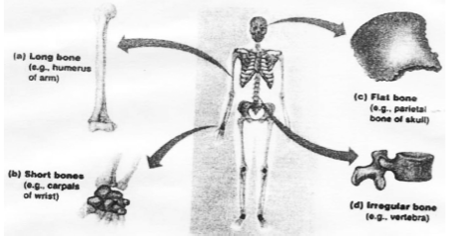
35. Write in detail about classification of bones.
View AnswerAns. Classification of Bones
i. Long bones:- They are long and wide. They act as lever. They are found in legs and arms. Example: humerus, femur, tibia and fibula.
ii. Short bones:- They are short in size and cube shaped. They are found in wrist and phalanges. Example: metatarsal and carpal.
iii. Flat bones:- These bones are flat and thin. They are composed of a central layer of sponge bone fixed between two outer layers of compact bone. Example: ribs and shoulder.
iv. Sesamoid bones:- These bones are seed like shaped and developed in the tendons where there is more friction. Example: palms of hands, sole of feet and knee caps,
v. Irregular bones:- These bones have in complete shaped as compared to other types. The bones of spinal column and skull are examples of these bones.
They are situated in Sutura points in the skull.
36. What is the need of inclusion in physical education?
View AnswerAns. Inclusion is needed for the following reasons:
i. Inclusion in physical education increases social skills of students with disabilities.
ii. Inclusion is needed to increase motor skills of students with disabilities.
iii. A disabled student gets an equal chance to participate in age-appropriate activities so, it increases the confidence level.
iv. Typical students get a chance to increase friendships with disable children.
v. Inclusive education provides an opportunity to a typical student to go beyond tolerance to acceptance and advocacy.
vi. Inclusive education enables a student to increase their knowledge and acceptance based on the “contact theory”. Through frequency, meaningful and pleasant interactions, changes in attitude can occur.
37. What are Diarthrosis joints of the human body? Explain their types briefly.
View AnswerAns. Diarthrosis joints or synovial joints are freely movable joints that are most commonly present in a human body. These joints are covered by a hyaline cartilage which is a thin membrane filled with synovian fluid.
These joints are supported by ligaments that provide it with elasticity and prevents all injuries. The Diarthrosis joints are classified into further categories that are:
i. Gliding Joints: These joints move against each other or glide on a single plane. The ends of one of the gliding joints are slightly concave and other is slightly convex. Bones of wrists and ankles are example of such joints.
ii. Hinge Joints: In such joints, movement takes place on just one axis or direction like a door on its hinges. One end of such joints has a concave shape while other has convex which allows movement only in one place. Such joints are present in elbow, fingers etc.
iii. Condyloid Joints: These joints allow for circular motion, flexion and extension. The wrist joint between the radius and the carpal bones is an example of a condyloid joint.
iv. Saddle Joints: These joints allow flexion, extension and other movements, but does not allow rotation. The joint between the carpal of the hand and the metacarpal of the thumb is one such joint.
v. Ball and Socket Joints: These joints move freely and can rotate on any axis. In these joints, a rounded bone lies in a cup-like cavity. The hip and shoulder joints are examples of ball and socket joints. vi. Pivot Joints: These are joints with a rotatory movement on one axis. In other words, a bone of cylindrical shape moves around a pivot within a ring made of bones and cartilage.