Time allowed: 3 hrs. Max Marks: 70
General Instructions:
1. The question paper consists of 5 sections and 37 Questions.
2. Section A consists of questions 1-18 carrying 1 mark each and are multiple choice questions. All questions are compulsory.
3. Section B consists of questions 19-24 carrying 2 marks each and are very short answer types and should not exceed 60-90 words. Attempt any 5.
4. Section C consists of questions 25-30 carrying 3 marks each and are short answer types and should not exceed 100-150 words. Attempt any 5.
5. Section D consists of questions 31-33 carrying 4 marks each and are case studies.
6. Section E consists of questions 34-37 carrying 5 marks each and are long answer types and should not exceed 200-300 words. Attempt any 3.
SECTION – A
1. After competing D.P.Ed. you can teach Classes ………………….. .
(a) I to VIII
(b) I to V
(c) VI to VIII
(d) I to X
View AnswerAns. (a) I to VIII
2.Given below are the two statements labeled Assertion (A) and Reason (R) :
A : The heart, blood and blood vessels constitute as the circulatory system of the body.
R : Arteries carry blood away from the heart and veins carry blood back to the heart.
In the context of above two statements, which one of the following is correct ?
(a) Both (A) and (R) are true and (R) is the correct explanation of (A).
(b) Both (A) and (R) are true, but (R) is not the correct explanation of (A).
(c) (A) is true, but (R) is false.
(d) (A) is false, but (R) is true.
View AnswerAns. (a) Both (A) and (R) are true and (R) is the correct explanation of (A).
3. Match List-I with List- II and select the correct answer from the code given below:
List-I List-II
A. Static Strength (i) ability to overcome resistance with maximum
or high speed
B. Maximum Strength (ii) ability of muscles to act against maximum
resistance in a single effort
C. Explosive strength (iii) ability of an individual to overcome resistance
under fatigue conditions
D. Strength Endurance (iv) ability of muscles to act against resistance in
static position
Option Code
A B C D
a) iv ii i iii
b) i ii iii iv
c) iii iv ii i
d) ii i iv iii
View AnswerAns. a) iv ii i iii
4. How many components are included in Khelo India Program ?
(a) 10
(b) 12
(c) 8
(d) 15
View AnswerAns. (b) 12
5. Identify the game :
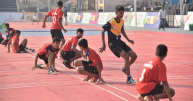
(a) Polo
(b) Kabaddi
(c) Ludo
(d) Kho-Kho
View AnswerAns. (d) Kho-Kho
6. ……………………. is a very good Kriya to get rid of nasal allergy.
(a) Vastradhauti
(b) Dandadhauti
(c) Neti
(d) Kapalbhati
View AnswerAns. (c) Neti
7. Where Lakshmibai National Institute of Physical Education (LNIPE) is situated ?
(a) New Delhi
(b) Patiala
(c) Kerala
(d) Gwalior
View AnswerAns. (d) Gwalior
8. What is the maximum range of movement possible at a joint known as ?
(a) Flexibility
(b) Coordinative ability
(c) Locomotor ability
(d) None of the above
View AnswerAns. (a) Flexibility
9. The plane which divides the body into a left and a right is called :
(a) coronal plane
(b) sagittal plane
(c) vertical plane
(d) transverse plane
View AnswerAns. (b) sagittal plane
10. Match List-I with List- II and select the correct answer from the code given below :
List-I List-II
A. Heart (i) carry blood to the heart
B. Arteries (ii) carry blood away from the heart
C. Veins (iii) prevent the blood flowing backwards
D. Valves (iv) as big as our fist
Option Code
A B C D
a) iv ii i iii
b) i ii iii iv
c) i ii iii iv
d) ii i iv iii
View AnswerAns. a) iv ii i iii
11. The main objective of Team Cohesion is to ?
(a) Work independently
(b) Cooperate and work together to accomplish common goals
(c) Criticize other group
(d) Fight for right of an individual
View AnswerAns. (b) Cooperate and work together to accomplish common goals
12. A genetic disorder is found in an intellectual disability which is known as :
(a) Autism
(b) Cerebral palsy
(c) Down-syndrome
(d) None
View AnswerAns. (c) Down-syndrome
13. Outer load in training depends on :
(a) sweating
(b) colour of skin
(c) the intensity of load
(d) fatigue
View AnswerAns. (c) the intensity of load
14. The major aim of physical education is to ensure a/an ………….. .
(a) child’s optimal physical development.
(b) programme of activity and sports for all.
(c) all-round development of the individual.
(d) complete removal of boredom of the class-room activity.
View AnswerAns. (c) all-round development of the individual.
15. The term ‘biomechanics’ to describe the application of mechanical principles in the study of living organism was adopted in :
(a) early 1970s
(b) late 1970s
(c) 1970
(d) early 1980s
View AnswerAns. (a) early 1970s
16. Given below are the two statements labeled Assertion (A) and Reason (R):
A: On April 6th 1896, after a gap of 1503 years, the modern Olympics were again started.
R: The important thing in Olympics is to triumph at any cost.
In the context of above two statements, which one of the following is correct?
(a) Both (A) and (R) are true and (R) is the correct explanation of (A).
(b) Both (A) and (R) are true, but (R) is not the correct explanation of (A).
(c) (A) is true, but (R) is false.
(d) (A) is false, but (R) is true.
View AnswerAns. (c) (A) is true, but (R) is false.
17. Which country has roots for practice of Yoga ?
(a) India
(b) USA
(c) UK
(d) Australia
View AnswerAns. (a) India
18. What is the formula for BMI ?
(a) Weight/height
(b) Weight/(height)2
(c) Height/Weight
(d) (Weight/Height)2
View AnswerAns. (b) Weight/(height)2
SECTION – B (Attempt Any Five)
19. What is meant by Team Cohesion ?
View AnswerAns. Team Cohesion can be defined as the amount of unity or harmony in a team. Team cohesion happens when a team remains united while working to achieve a common goal.
20. Define Disorder.
View AnswerAns. Disorder can be defined as a disruption caused to the normal functions of a person. The Oxford English Dictionary defines a disorder as an illness that disrupts normal physical or mental function.
21. What do you mean by sports journalism ?
View AnswerAns. Newspapers & sports magazines need professional people of sports to perform journalism. Those physical educators who have the talent for writing may opt a career as the sports journalist. A large number of sports channels like ESPN, Star Sports etc. need good commentators for various sports events. So, sportsmen with good speaking skills and having knowledge about the concerned game can opt for this as a career.
22. Define Extension.
View AnswerAns. Extension is the opposite of flexion. Extension occurs when the angle between the two bones increases
23. List the principles of Niyama.
View AnswerAns. 1. Saucha (Purification), 2. Santosh (Contentment), 3. Tapas (Asceticism), 4. Swadhyaya (Study), 5. Ishwara Pranidhana (Dedication To God)
24. Name some technological advancements in sports.
View AnswerAns. 1. Instant Replay 2. Sensor Tools 3. Timing Systems 4. RFID Chips 5. Equipment Development.
SECTION – C (Attempt Any Five)
25. Explain Resilience and its importance in sports ?
View AnswerAns. Resilience is a psychological attribute that refers to an individual’s ability to cope with adversity, stress, and uncertainty. It involves the capacity to adapt to challenging situations and recover quickly from setbacks. Resilience can be fostered through various techniques, such as cognitive reframing, positive self-talk, and social support. In sports, resilience is a critical attribute that can impact an athlete’s performance and success. Athletes face numerous challenges, such as injuries, defeats, and intense pressure to perform, which can take a toll on their mental and emotional well-being. Resilience can help athletes cope with these challenges and maintain their motivation, focus, and confidence. Resilient athletes are better able to bounce back from setbacks, learn from their failures, and remain committed to their goals. Some attributes of resilience include the ability to regulate emotions, maintain optimism, and cultivate a growth mindset. Resilient individuals are also adept at problem-solving, resourceful in seeking out support and resources, and able to maintain a sense of purpose and meaning even in the face of adversity.
26. Differentiate between ‘Abduction’ and ‘Adduction’ movements.
View AnswerAns. Abduction and Adduction : These two movements are in the frontal plane and around a sagittal horizontal axis. Abduction is a movement laterally away from the midline or centre of your body. From a standing position, when you move your leg to the side away from the middle of your body you are abducting your leg. Examples of abduction include Straight arm dumbbell side raise, Star jump, Hip abduction machine. Adduction is a movement towards the midline or centre of your body. When you return your leg from the abducted position back to a normal standing position you are adducting your leg. Examples of adduction include Cable crossover pull down, Supine dumbbell flys, Hip adduction machine.
27. Write in brief about the objectives of Physical Education.
View AnswerAns. Objectives of Physical Education
1. Health Education : Physical Education provides students with an understanding of the benefits of physical activity and exercise for overall health and wellness. This includes educating students on the importance of healthy eating habits, stress management and disease prevention.
2. Physical Development : Physical development is the primary objective of physical education. It includes development of strength, muscle tone, endurance, good posture and good health habits. According to this objective, all the systems in our body such as circulatory system, nervous system, respiratory system, digestive system etc. should work in a proper way.
3. Motor Development : Motor development refers to the neuromuscular relationship of nerve or nerve fibre to the one that connects the central nervous system with muscles. The development of neuro-muscular skills help in developing the ability to do various activities like running, jumping, throwing etc. It helps in developing quick reflexes and leads to efficient and graceful movements with little expenditure of energy. Physical education activities improve neuromuscular co-ordination. Good co-ordination keeps away the fatigue and reaction time also improves.
4. Emotional Development : Every individual has different emotions like courage, truthfulness, initiative, loyalty, co-operation, strength to face defeat or victory, sportsmanship etc. Controlling these emotions in normal conditions and under pressure is very important. Physical education provides opportunities to develop these emotions and teaches proper control over these emotions.
5. Social Development : No individual can live alone in the society. An individual is the part of society and he needs to follow the rules, regulations and laws of the society. Physical education provides lot of opportunities for social development. During games, an individual has to deal with players of his own team and rival team. He has to follow rules of the game and instructions given by the coach, captain and referees. Thus, physical education develops qualities of co-operation, togetherness, tolerance, leadership, self control, discipline etc.
6. Mental Development : Physical education helps in developing mental level of a person. Various physical activities not only require physical strength but also need alertness of mind, deep concentration and precise movements. The study of physical education also includes understanding of rules and regulations, techniques of the game, anatomical and physiological studies, balanced diet etc. Thus, physical education improves the knowledge of an individual and enables him to face and solve new situations and problems. So, his mental development takes place in many ways.
28. Explain Physical wellness and Mental Wellness.
View AnswerAns. Physical wellness : Physical wellness refers to optimum muscular endurance, muscular strength, cardio vascular endurance, flexibility and agility that can achieve daily demands. It helps a person to meet the daily activities and demands of life. This is achieved by regular exercise, meditation, healthy eating, regular sleep and healthy communication amongst people around.
Mental Wellness : Mental wellness, also known as intellectual wellness, is the ability to learn and use information effectively. It focuses on improving creativity, mental alertness, motivation to learn and master new skills. It also helps determine how we handle stress, relate to others and make choices in daily routine and at unexpected times.
29. How have smart helmets helped in decreasing chances of injury ?
View AnswerAns. One of the biggest improvements in sporting tech is smart helmets. With concussions damaging the sport, something had to be done to protect athletes. New helmet technology offers sensor and magnet tech built which is able to detect and disperse force, thus decreasing the changes of head injury. In fact, the magnets themselves play a role in displacing the force of impact. When an impact occurs, the helmet communicates to the coach that the player has been hit. This way, the coaches can take action immediately in completing concussion diagnoses.
30. Briefly explain procedure of any two Pranayama techniques.
View AnswerAns. (i) Anuloma-Viloma / Nadi-Shodhana Pranayama
Procedure :
1. Sit in any comfortable meditative posture.
2. Keep the head and spine erect. Close your eyes.
3. Raise the right hand and place the right thumb on the right nostril and close it. Inhale slowly through the left nostril.
4. Release the pressure of the thumb on the right nostril. Now close the left nostril by the ring finger and the little finger and exhale slowly through the right nostril.
5. Now inhale slowly through the right nostril. Close the right nostril with your thumb and exhale slowly through the left nostril.
6. This is one round of Anuloma Viloma pranayama. Repeat it 5 times.
(ii) Surya Bhedi Pranayama :
Procedure :
1. Sit in a comfortable seated position with a straight spine and neck. Close your eyes and become aware of your breath.
2. Allow the left arm to relax by your side. Fold your right-hand’s index finger & middle finger down towards the palm while keeping the ring and little finger as in the natural position.
3. Closing the left nostril, inhale slowly and deeply through the right nostril. Retain the breath for a few seconds.
4. Open the left nostril and close the right nostril with the thumb, exhaling slowly. Repeat steps 6-7 for one to three minutes.
SECTION – D
31. To perform the daily activities, we need to change body positions or move our body parts as well as we need to displace from one place to another. Every human movement is described in three dimensions based on a series of planes and axis.
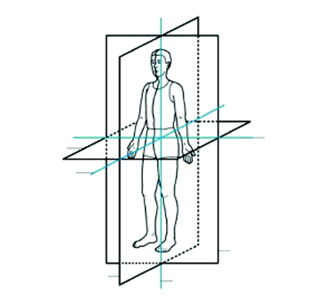
On the basis of the above, answer the following questions :
(i) A ……………. is an imaginary flat surface passing through the body or organ along which a movement takes place.
(a) Plane
(b) Axis
(c) Line
(d) Section
View AnswerAns. (a) Plane
(ii) A vertical plane that divides the body into left and right sides is known as ……………. .
(a) Coronal Plane
(b) Transverse Plane
(c) Sagittal Plane
(d) Horizontal Plane
View AnswerAns. (c) Sagittal Plane
(iii) ……………. axis runs from left to right through the center of the body.
(a) Longitudinal Axis
(b) Vertical Axis
(c) Frontal Axis
(d) Sagittal Axis
View AnswerAns. (c) Frontal Axis
(iv) Sagittal axis is also known as ……………. axis.
(a) Anteroposterior Axis
(b) Transverse Axis
(c) Vertical Axis
(d) Frontal Axis
View AnswerAns. (a) Anteroposterior Axis
32. The modern Olympics are a premier international sporting event. The modern Olympics feature a diverse range of athletic disciplines, bringing together athletes from around the world to compete on a grand stage. These games promote friendship, fair competition, and unity among nations. With iconic symbols like the Olympic rings and torch relay, the modern Olympics emphasize global cooperation, athleticism, and cultural exchange, showcasing the spirit of international sportsmanship.
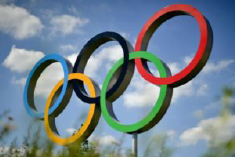
Based on the above, answer the following questions :
(i) On …………………… , after a gap of 1503 years, the modern Olympics originated, following the ancient Greek tradition.
(a) April 6, 1896
(b) June 25, 1894
(c) August 8, 1900
(d) July 4, 1904
View AnswerAns. (a) April 6, 1896
(ii) The modern Olympics are held every …………………… years.
(a) 2
(b) 4
(c) 5
(d) 6
View AnswerAns. (b) 4
(iii) …………………… of France, is rightly known as the “Founder of the Modern Olympic Games.’’
(a) Pierre de Coubertin
(b) Jules Ferry
(c) Louis Pasteur
(d) Napoleon Bonaparte
View AnswerAns. (a) Pierre de Coubertin
(iv) …………………… is the supreme controlling body for the modern Olympic Games, which was formed during the International Athletic Conference held at Paris on June 25th, 1894.
(a) FIFA
(b) IOC
(c) ICC
(d) UNESCO
View AnswerAns. (b) IOC
33. The human skeletal system is like the body’s framework, made up of bones and other tissues. It gives our body its shape, helps us move, and keeps our organs safe. By learning about its parts and how it works, we can understand how our bodies move and stay strong.
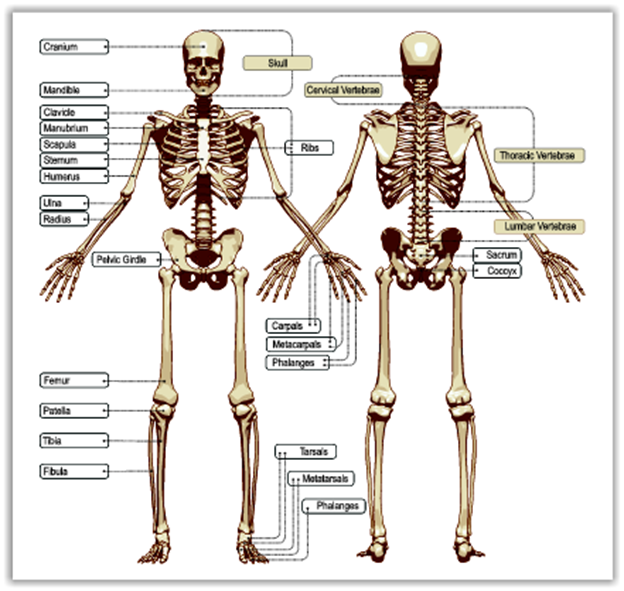
Based on the above, answer the following questions :
(i) A baby’s body has about …………….. bones at birth.
(a) 206
(b) 300
(c) 256
(d) 150
View AnswerAns. (b) 300
(ii) …………….. is a soft and flexible tissue found at the joints, providing cushioning and preventing friction between bones.
(a) Ligament
(b) Cartilage
(c) Tendon
(d) Muscle
View AnswerAns. (b) Cartilage
(iii) …………….. bones are small and have a cube-like shape.
(a) Flat
(b) Irregular
(c) Short
(d) Long
View AnswerAns. (c) Short
(iv) …………….. bones are found in the limbs and are characterized by their length and thin cylindrical shape.
(a) Flat
(b) Irregular
(c) Short
(d) Long
View AnswerAns. (d) Long
SECTION – E (Attempt Any Three)
34. Explain in detail the Physical Education development in India after Independence.
View AnswerAns. India made significant progress in various aspects after gaining independence in 1947. In the field of physical education, the government of India introduced numerous schemes to promote sports and fitness.
• Dr. Tara Chand Committee
In 1948, the Central Government Physical Education Committee, also known as the Tara Chand Committee, was established, which recommended the creation of the Central Institute of Physical Education and Recreation, as well as the improvement of sports standards in India. This committee gave emphasis for training teachers in the field of Physical Education.
• Central Advisory Board of Physical Education and Recreation
In 1950, the Central Advisory Board of Physical Education was formed to advise the government on physical education matters. One of the board’s key objectives was to make physical education a compulsory subject at the elementary, middle and senior secondary school levels. To promote indigenous physical activities, the board developed the National Plan of Physical Education and Recreation in 1956. The board recommended many programs like development of training for leaders in Physical Education, introduction of scholarship for research in Physical Education, organisation of seminars on Physical Education, giving financial assistance to the colleges of Physical Education and giving directions to the state governments for improving organisation of Physical Education in their respective states.
• First Asian Games
The first Asian Games were held in New Delhi in 1951, inspiring Indian youth to participate in international sports.
• Rajkumari Coaching Scheme
In 1953, the health minister of India, Rajkumari Amrit Kaur, introduced a coaching scheme for games and sports to streamline coaching programs in India. The aim of the scheme was training sportsmen. As a result, the National Institute of Sports (NIS) was established in 1961 in Moti Bagh, Patiala, Punjab, to produce qualified coaches in different sports. The scheme received wide popularity since famous players like Major Dhyan Chand and Dr. Ram Singh worked under this scheme.
• All India Council of Sports
In 1954, the All India Council of Sports was established to act as a liaison between the government and national sports federations to assist in financial matters. Under the All India Council of Sports, state and district sports councils were established.
• National Discipline Scheme
The National Discipline Scheme was launched in 1954, with the primary objective of developing a strong and capable youth population that could defend the country in case of an emergency. Trained instructors were provided by the central government to the states and orientation programs were conducted for Physical Education Teachers to enable them to work effectively under this scheme. The scheme played a crucial role in promoting National Integration.
• Lakshmibai National Institute of Physical Education
In 1957, the Ministry of Education & Culture, Government of India, established the first College of Physical Education, the Lakshmibai College of Physical Education (LCPE), in Gwalior, Madhya Pradesh. The Institute was given a status of national importance and hence it was renamed Lakshmibai National College of Physical Education (LNCPE) in 1973. In 1982 it was given a status of Autonomous College. In 1995 it was conferred as deemed University and was renamed as Lakshmibai National Institute of Physical Education (LNIPE).
• Sports and Youth Welfare Department
In 1958, the Ministry of Education established the Sports and Youth Welfare Department to promote physical education in India. The ministry sponsored the National Physical Efficiency Drive in 1959 to assess the physical fitness status of people in India.
• Ad Hoc Inquiry Committee
In 1958, Ad Hoc Inquiry Committee was established under the chairmanship of Maharaja of Patiala. The committee was given a task to investigate the low standard of sports. The committee made recommendations that better opportunities of training should be given. In addition to this better playgrounds should be developed in the schools. It also suggested that talented players should be given special diets.
• Kunzru Committee
The Ministry of Education constituted a committee in 1959 under the chairmanship of Dr. Hridaya Nath Kunzru. The most important suggestion of the committee was integration of various schemes in the field of Physical Education, Recreation and Youth Welfare.
• Netaji Subhas National Institute of Sports
The National Institute of Sports was established by the Government of India on 7th May, 1961 with the objective of developing sports in the country on scientific lines and to train the Coaches in different sports disciplines. The Institute was renamed as Netaji Subhas National Institute of Sports (NSNIS) on 23rd January, 1973.
• National Fitness Corps
The National Fitness Corps was established in 1965 with the objective of making youth physically strong.
• Sports Tournament Schemes
The government introduced the Rural Sports Tournament Scheme in 1970-71 to involve rural youth and identify natural talent in different sports. The Sports Talent Search Scheme was launched in 1970-71 to promote state and national-level athletes. In 1975, the National Sports Championship was introduced to enhance women’s participation in sports.
• Sports Authority of India
The 1982 Asian Games held in India provided a huge boost to sports infrastructure and facilities. In 1984, the Sports Authority of India (SAI) was established under the Department of Sports to maintain and utilise sports infrastructure built for the Asian Games. The SAI has two objectives : to promote sports and achieve sports excellence at national and international levels.
• Department of Youth Affairs and Sports
The Department of Sports was set up at the time of organisation of 1982 Asian Games. Its name was changed to the Department of Youth Affairs & Sports during celebration of the International Youth Year, 1985. It became a separate Ministry on 27 May 2000. Subsequently, In 2008, the ministry was bifurcated into the Department of Youth Affairs and Department of Sports under two separate Secretaries.
• Introduction in school curriculum
In 1988, NCERT developed the National Curriculum for Elementary and Secondary Schools. The Health and Physical Education and Sports was introduced in the school curriculum.
• Commonwealth Games
The XIX Commonwealth Games were held in New Delhi in 2010.
• CBSE
In 2018, the CBSE made Physical Education a compulsory subject for classes IX to XII, mainstreaming health and physical education.
35. How a special education counsellor, occupational therapist, speech therapist and special educator helps children with special needs ?
View AnswerAns. Various professionals and their role in helping the Children with special needs are discussed below :
1. Special education counsellor :
Special education counsellors are the specialists who work with special needs students in elementary schools, middle schools, and high schools, to ensure they have the support services they need in order to achieve their highest potential in the areas of academics, personal and social growth, and career development. This is accomplished by working with students with social, emotional, behavioral and physical disabilities in a variety of settings, including in one-on-one counselling, group counselling, in special education classrooms, as well as in regular education classrooms. The role of a special education counsellor for children with special needs is described below :
• To work with special education and general education teachers and staff members by advocating on the child’s behalf, collaborating with teachers to develop more effective support services for the child, or working with teachers and staff members to develop a better understanding of the interventions in place to help the child succeed.
• To collaborate and consult other special services workers, such as school psychologists, occupational and physical therapists, speech-language pathologists, etc.
• To work with families and improve their abilities in order to meet their child’s needs at home.
• Offering parents and guardians insight effective strategies for improving their child’s functioning.
• Referring families to outside resources, such as child and family counselors, vocational training, or nonprofit organizations that specialize in working with families of special needs children.
2. Occupational Therapist :
The Occupational Therapist is trained to provide assessment, treatment and rehabilitation for children and young people who have a physical, coordination and processing problems. An Occupational Therapist can help your child increase their level of independence starting with reaching, grasping, picking up small objects, and working on other skills such as feeding, dressing and toileting. An Occupational Therapist is able to assist your family in obtaining specialised equipment that may be needed by you or your child.
3. Speech Therapist :
A speech therapist is a trained medical professional who can help children with a number of oral disorders such as trouble swallowing, motor skills, speech issues, cognitive-linguistic conditions and language. The role of a Speech Therapist for children with special needs is described below : • To help assess a condition, diagnose specifically what the issue is and develop a plan to help treat the disorder, and then follow through with therapy.
• To plan a course of treatment, working with the child to achieve the targets and monitoring his/her progress on a regular basis.
• To help in correcting speech sounds, perceiving language in children with developmental disabilities, stuttering and other disorders such as speaking in a harsh or inappropriate tone during certain moments.
• To keep in mind the personal, social, academic, vocational as well as emotional needs of the children while treating them.
4. Special Educator :
A special educator is someone who works with children and youths who have severe cognitive, emotional, or physical disabilities. Educators working on Early Intervention Teams have training in child development and learning. They work with your family and the other therapists to help your child gain skills to promote their overall development.
The role of a Special Educator for children with special needs is described below :
• To examine abilities and skills of the child, analyze the problem areas so that suitable method of instruction can be designed.
• To teach communication and basic literacy skills.
• To help the students in improving their academic performance, social skills and emotional intelligence.
• To understand the potential of each child and work towards enhancing it.
• To work closely with parents and keep them updated on progress, make recommendations to promote learning in the home.
• To keep record of the progress of the child and modify their lesson plans accordingly.
• To work with other educational team members such as teachers, counselors, school authorities and strive towards all round development of children with special needs.
36. Explain in detail the Somatotypes.
View AnswerAns. According to William Herbert Sheldon, there are three types of personalities on the basis of physical traits known as somatotypes.
(i) Endomorph : An endomorphic somatotype, also known as viscerotonic type, is characterised by the social temperament type. They are physically quite ‘round’, have short arms and legs. General Physical characteristics of endomorphs are :
(a) Wide hips and narrow shoulders, which makes them rather pear-shaped.
(b) Quite a lot of fat spread across the body, including upper arms and thighs.
(c) They have quite slim ankles and wrists, which only serves to accentuate the other fatter parts.
Psychologically, the endomorph is :
Sociable
Fun-loving
Tolerant
Even-tempered
Good humored
Relaxed
With a love of comfort
And has a need for affection
(ii) Ectomorph : An ectomorph somatotype is also known as the cerebrotonic type. General Physical characteristics of ectomorphs are :
(a) Narrow shoulders and hips
(b) A thin and narrow face, with a high forehead
(c) A thin & narrow chest and abdomen
(d) Thin legs and arms
(e) Very little body fat Even though they may eat as much as the endomorph, they never seem to put on eight. Psychologically they are :
Self-conscious
Private
Introverted
Inhibited
Socially anxious
Artistic
Intense
Emotionally restrained
Thoughtful
(iii) Mesomorph : The mesomorph somatotype is also known as the somatotonic type. The mesomorph is somewhere between the round endomorph and the thin ectomorph. General Physical characteristics of mesomorphs are :
(a) Large head, broad shoulders and narrow waist (wedge-shaped).
(b) Muscular body, with strong forearms and thighs
(c) Very little body fat
They are generally considered as ‘well-proportioned’. Psychologically, they are :
Adventurous
Courageous
Indifferent to what others think or want
Assertive/bold
Zest for physical activity
Competitive
With a desire for power/dominance
And a love of risk/chance
37. What is doping ? Explain its disadvantages.
View AnswerAns. Doping refers to an athlete’s use of prohibited drugs or methods to improve training and sporting results. Doping methods or substances might harm the health of athletes and might be fatal.
According to International Olympic Committee, ‘‘Doping is the use of any method or substance that might harm the athlete, in a quest to gain an unfair advantage, over his/her fellow competitors.”
According to WADA (World Anti-Doping Agency), ‘‘Doping is defined as the occurrence of one or more of the following anti-doping rule violations :
1. Presence of a prohibited substance in an athlete’s sample.
2. Use or attempted use of a prohibited substance or method.
3. Refusing to submit to sample collection after being notified.
4. Failure to file athlete whereabouts information and missed tests.
5. Tampering with any part of the doping control process.
6. Possession of a prohibited substance or method.
7. Trafficking a prohibited substance or method.
8. Administering or attempting to administer a prohibited substance or method to an athlete.’’ DISADVANTAGES OF DOPING
The use of performance enhancing substances leads to serious health problems and even death.
(a) Addictive effects : Most of these substances have addictive effects and hence it creates physical and psychological effects.
(b) Cardiac Problems : Doping has adverse effect over heart and causes many types of cardiac problems like varied heart beat, hypertension, cardiac arrest etc.
(c) Affects Kidney and liver : Doping substances contain strong chemicals and hence it affects liver and kidney adversely. It leads to non-functioning and partial damage of important organs.
(d) Unbalanced Psychological Behaviour : These substances usually lead to unbalanced psychological behaviour like aggression, loss of concentration, headache, loss of neuromuscular responses, insomnia, depression etc.
(e) Impotence : Doping causes impotence in males i.e. shrinking of testicles, reduction of sperm production. In females it causes infertility.
(f) Dehydration : Doping causes great loss of water from body, thus leads to dehydration. Dehydration results in cramps, heat stroke, high temperature etc.
(g) Digestive problems : Most of these banned drugs cause digestive or gastro problems like loss of appetite, hormonal variation, constipation, stomach ache etc.