1. Which of the following is NOT the cause of Food Intolerance? (2024)
(a) Toxins formation due to food poisoning
(b) Absence of an enzyme
(c) Roughage
(d) Gluten
View AnswerAns. (c) Roughage
2. Body Mass Index is one of the common way of assessing healthy body weight.
Which of the following BMI range is considered for healthy weight? (2024)
(a) 25.0 – 29.0
(b) 30.0 – 34.9
(c) 18.5 – 24.9
(d) 35.0 – 39.9
View AnswerAns. (c) 18.5 – 24.9
1. Balanced diet is related to-
(a) Consuming right amount of vitamins
(b) Consuming correct ratio of carbohydrates and fats
(c) Consuming all the nutrients in right amount
(d) Consuming excess of protein and minerals
View AnswerAns. (c) Consuming all the nutrients in right amount
2. During the morning assembly in the school, Anu fell unconscious. She was taken to nearby doctor. The doctor declared her malnourished and advised her to take balanced diet everyday. Balanced diet consists:
(a) Macro Nutrients
(b) Micro Nutrients
(c) Nutritive and Non-Nutritive components
(d) Nutritive component.
View AnswerAns. (c) Nutritive and Non-Nutritive components
3. Which of the following is a group of macro-nutrients?
(a) Carbohydrates, Fats, Protein
(b) Vitamins, Minerals, Water
(c) Fats, Fibre, Protein
(d) Minerals, Carbohydrates, Vitamins
View AnswerAns. (a) Carbohydrates, Fats, Protein
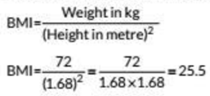
4. What is BMI? Calculate BMI of a child whose weight is 72 kg and height 1.68 mt.
View AnswerAns. Body mass Index (BMI) is a indicator for determination of healthy weight
5. Differentiate between Macro and micro nutrients.
View AnswerAns. Macro-Nutrients: Nutrients which are required by the human body in larger quantities are known as macro- nutrients. Also due to their importance, they are required in more quantities. Macro-nutrients serve as the raw material for growth and maintenance.
Micro-nutrients are required in very small amounts by our body. However, they are extremely important for our normal body functions. Various important chemical reactions in our body can only happen in the active participation of some of these micronutrients. These include vitamins and minerals.
6. Write briefly about ‘Micro nutrient.
View AnswerAns. Vitamin and Minerals are commonly referred to as micro nutrients because human body requires small amount of these for survival and proper growth and development.
Various micro nutrients are vitamin A, B, C, D, E and K minerals such as iron calcium, magnesium, iodine etc.
7. Why is roughage considered as a necessary part of diet?
View AnswerAns. Roughage is considered as a necessary part of diet because Roughage is the portion of plant foods, such as whole grains, nuts, seeds, legumes, fruits, and vegetables, that your body can’t digest. However, it’s an important food source for the beneficial bacteria in your gut. It may also aid weight management and decrease certain risk factors for heart disease.
8. Why does the weightlifter’s diet include lots of proteins?
View AnswerAns. Proteins helps in forming new tissues and repairing the broken tissues. It also maintains strong ligaments and tendons.
9. What do you mean by food intolerance?
View AnswerAns. Food intolerance means the individual element of certain food cannot be properly processed and absorbed by the digestive system of the person.
10. Fats are derived from two sources. Name them.
View AnswerAns. We can obtain fats from plant sources (like from different oilseeds such as mustard, soyabean, sunflower seed, groundnut, rice bran etc..) or from animal sources (such as milk products such as butter, ghee and fat contained in animal meat). Optimum fat intake is important for health and for absorption of fat soluble vitamins.
11. What is roughage or fibre in diet?
View AnswerAns. Roughage is the fibre present in food that helps to eliminate wastes from the body. The main sources of fibre are whole grains, cereals, breads, vegetables and fruits.
12. Define a balanced diet.
View AnswerAns. A balanced diet is a diet which consist of proper nutrients, protein, vitamins etc. which is required for proper strength, functioning of a body.
13. What are vitamins?
View AnswerAns. Vitamins are micronutrients. These are organic chemicals that keep our body healthy. Vitamins can be fat soluble (such as A, D, E, K) or water soluble (B vitamins and vitamin C). If vitamins are not taken in proper amount they cause deficiency disease.
14. Define balanced diet. Explain any four micro nutrients.
View AnswerAns. Balanced diet is a diet that contains adequate amounts of all the necessary nutrients required for proper growth and maintenance of body.
Nutrients like vitamins and minerals are required in small amounts and are called micronutrients. Although these are required in smaller amounts but they are all equally essential for our health. Each of these nutrients plays a significant role in the body.
Vitamins: Vitamins are the chemicals which our body needs in small amounts to function properly. They work in a variety of ways, mostly as ‘helpers’ e.g.. many of the vitamins help the body to use protein, fats, and carbohydrates.
Vitamins are divided into two categories:
1. Water-soluble vitamins include all the B vitamins and vitamin C. The amount of water-soluble vitamins that body doesn’t use passes through the kidneys and leaves the body as urine or stool. The body needs water soluble vitamins in frequent, small doses, and they are unlikely to reach toxic levels.
2. Fat-soluble vitamins include vitamins A, D, E, and K. Fat-soluble vitamins are stored in the body cells and are not passed out of the body as easily as water soluble vitamins. They are more likely to reach toxic levels if a person takes in too much of these vitamins.
Minerals: Minerals are inorganic elements which are required by the body needs for various physiological functions. There are minerals required in larger amounts called macro-minerals and those required in smaller amounts are called micro-minerals (trace minerals).
Trace minerals (micro-minerals): The body needs trace minerals in very small amounts. Although iron is considered to be a trace mineral, the amount needed is somewhat more than for other microminerals.
15. Explain macro-nutrients and their role in our diet.
View AnswerAns. Macro nutrients constitute the majority of an individual’s diet. They include fats, proteins, carbohydrates and water. It can be said that they are taken in large amount.
Carbohydrates:
Role
(i) Act as major fuel for muscular contraction.
(ii) It provides the energy to our body.
(iii) It helps to maintain body weight and body temperature of the body
(iv) Important for different digestive operations in our body.
Sources: Rice, wheat, potatoes, beetroot, sugarcane, sweet fruits and vegetables, Etc.
Fats: Role
(i) It provides heat and energy to the body
(ii) It protects the body from extreme cold and hot climate
(iii) Helps in regulation of body temperature.
(iv) It also helps to protect internal organs of the body. Sources: Vegetables sources: Edible oil, dry fruits, sweet potatoes, whole corn, food grains
Animal Sources: Meat, milk, butter, ghee, eggs, curd, food grains, fish etc
Proteins: Role
(i) It also plays an important role in the physical and mental development of an individual.
(ii) Necessary for our growth and development and for repairing the wear and tear of tissues.
(iii) It helps in the formation of enzymes and hormones and also act as a source of energy
(iv) Transport oxygen and nutrient.
(v) Regulates balance of water and acid.
Sources: Pulses, beans, cheese, milk, vegetables, fish, meat, eggs, etc.
Water:
Role
(i) Helps in transportation of nutrients to cells of body.
(ii) Regulates body temperature
(ii) Vital for various chemical reactions taking place in the body.
(iv) Essential for body metabolism.
(v) Keeps the body hydrated.
Sources: Drinking water
16. Diets for sportspersons are important. What should be the aims of preparing diet for sportspersons?
View AnswerAns. Sportsperson’s balanced diet should be calibrated to suit their intensity of training.
Carbohydrates: Carbohydrates are the important fuel source. However, constantly eating a high-carbohydrate diet is not advised. This conditions the body to use only carbohydrates for fuel and not the fatty acids derived from fats.
Fats: Fat is also an important contributor to energy needs. During ultra-endurance events, lasting 6-10 hours, fat can contribute 60-70% of energy requirements. In sports like running, cycling, high jump, gymnastics, etc., which requirea high level of body movements a minimum amount of fat is preferred. In sports such as sumo wrestling, maximum amount of fat is required.
Fat consumption should be a minimum of 20 percent of total energy intake to preserve athletic performance. Proteins: When compared to fat and carbohydrates, protein contributes minimally to energy needs for the body. Though it can also be used as a fuel, our body prefers carbohydrate and fat as a source of energy. Proteins are used in the body as tissue build up and repair.
The current Recommended Daily Allowance (RDA) for protein is 0.8 grams per kilogram per day.
Eating protein after an athletic event has been shown to support muscle protein synthesis.
Water: Water is an important nutrient for the athlete. Water loss during an athletic event varies between individuals. To avoid dehydration, an athlete should drink 5 to 7 mL per kilogram of body mass approximately four hours before an event. Throughout the event, they should drink chilled water or electrolyte drinks, consuming enough to match sweat losses. Chilled fluids are absorbed faster and help lower body temperature.
Competing at high altitudes also increases water needs. Athletes consuming sport drinks or energy drinks should be aware of caffeine levels.
Vitamins: Maintaining adequate levels of vitamins and minerals is important for body function, and therefore, athletic performance. There is no evidence that taking more vitamins than is obtained by eating a variety of foods will improve performance. B vitamins, including thiamin, riboflavin and niacin, are essential for producing energy from the fuel sources in the diet. Carbohydrate and protein foods are excellent sources of these vitamins.
Minerals: Minerals play an important role in athletic function. Sodium is lost through the course of an athletic event through sweat, so it may be necessary to replace sodium in addition to water during an event.
Potassium levels can decline during exercise, similar to sodium, though losses are not as significant. Eating potassium-rich foods such as oranges, bananas and potatoes throughout training and after competition supplies necessary potassium. Needs for this mineral are especially high in endurance athletes. Female athletes and athletes between 13 and 19 years old may have inadequate supplies of iron due to menstruation and strenuous exercise.
Calcium is important in bone health and muscle function. Athletes should have an adequate supply of calcium to prevent bone loss. Female athletes are more likely to have inadequate calcium consumption.
17. Vitamins are very essential for working of the body and are divided into two groups. Explain about them.
View AnswerAns. Vitamins are broadly classified as water soluble (B vitamins and vitamin C) and fat soluble (vitamins A, D, E and K). Water soluble vitamins:
The B vitamins are widely distributed in foods, and their influence is felt in many parts of the body. They function as coenzymes that help the body obtain energy from food. The B vitamins are also important for normal appetite, good vision, and healthy skin, and proper functioning of the nervous system, and red blood cell formation.
Fat soluble vitamins: Fat soluble vitamins are essential for our normal bodily functions. These are absorbed by our body only in presence of fats or lipids.
Vitamin K Vitamin K is naturally produced by the bacteria in the intestines, and plays an essential role in normal blood clotting, promoting bone health, and helping to produce proteins for blood, bones, and kidneys.
Good food sources of vitamin K are green, leafy-vegetable such as turnip greens, spinach, cauliflower, cabbage and broccoli, and certain vegetable oils including soybean oil, cottonseed oil, canola oil and olive oil.
Vitamin A also called retinol, has many functions in the body. In addition to helping the eyes adjust to light changes, vitamin A plays an important role in bone growth, tooth development, reproduction, cell division, gene expression, and regulation of the immune system.
A wide variety of foods provide vitamin A. These include carrots, pumpkin, winter squash, dark green leafy vegetables and apricots.
Vitamin D Vitamin D plays a critical role in the use of calcium and phosphorous by our body. It works by increasing the amount of calcium absorbed from the small intestine, helping to form and maintain bones. The food sources of vitamin D are milk and other dairy products. fish oil.
18. Explain any five essential elements of diet.
View AnswerAns. Elements of a Diet include:
(a) Carbohydrates: Carbohydrates are one of the essential components of our diet. They act like fuel in our body providing us the energy to do work. The quantity of carbohydrate, intake depends upon the daily routine of the person. Sources of carbohydrates are rice, maize, jowar, bajra, pulses, gram, dry pea, dates, grapes, potato, banana, jaggery and sugar.
(b) Proteins: Protein is a nutrient required by our body for growth. Every cell in the human body contains protein. Proteins contain carbon, hydrogen, oxygen, nitrogen and sometimes Sulphur. In our body protein forms the tissues of our body. Sources of protein are eggs, milk, milk products, meat, fish, pulses, soybean, mustard, groundnuts, dry fruits etc. Proteins are made of amino acids.
(c) Minerals: Minerals are an important constituent of our diet. Some of the important minerals required by our body are iron, calcium, phosphorus, sodium, magnesium, potassium, zinc and sulphur. Some minerals are required in extremely small quantities these are called micro- minerals.
(d) Vitamins: Vitamins are organic chemicals which are required in our body in small quantities to keep ourselves healthy. If vitamins are not taken in proper quantities, it may cause a deficiency disease. For example, deficiency of vitamin C causes scurvy. Vitamins are categorised into following two types:
Fat soluble vitamins -such as vitamin A, D, E, K
Water soluble vitamins-such as B vitamins and vitamin C. (e) Water: Water is also a non-nutritive component of the diet though it contains trace amounts of dissolved mineral salts that benefit us. All the food we eat contains different amounts of water in them. Water is also used in cooking food. The following are some of the importance of water-Water is an essential component of food. Blood is made of over 90% water. It regulates body temperature by sweating.
19. Role of water in human body is to ____________
(a) Regulate body temperature
(b) Give energy
(c) Repair cell
(d) Protect from disease.
View AnswerAns. (a) Regulate body temperature
20. Which of the following are water soluble vitamins?
(a) Vitamin D & K
(b) Vitamin B & C
(c) Vitamin A & E
(d) Vitamin A & C
View AnswerAns. (b) Vitamin B & C
21. Carrot and orange come under-
(a) energy giving foods
(b) body building foods
(c) protective or regulatory foods
(d) Normal foods
View AnswerAns. (c) protective or regulatory foods
22. Which vitamins were consumed the most during Covid?
(a) Vitamin C and D
(b) Vitamin B and C
(c) Vitamin A and B
(d) Vitamin B and D
View AnswerAns. (b) Vitamin B and C
23. _____________ helps in smooth elimination of stool or faeces.
(a) Lordosis
(b) Roughage
(c) Minerals
(d) Vitamins
View AnswerAns. (b) Roughage
24. Match the following vitamins with their functions:
(1) Vitamin K (i) Need for blood clotting
(2) Vitamin D (ii) For protection of cell wall
(3) Vitamin E (iii) For vision in dim light
(4) Vitamin A (iv) For absorption of calcium and phosphorus
Select the correct answer:
(a) 1 – (i), 2 – (iv), 3 – (iii), 4 – (ii)
(b) 1 – (i), 2 – (ii), 3 – (iii), 4 – (iv)
(c) 1 – (ii), 2 – (iv), 3 – (iii), 4 – (i)
(d) 1 – (i), 2 – (iv), 3 – (ii), 4 – (iii)
View AnswerAns. (d) 1 – (i), 2 – (iv), 3 – (ii), 4 – (iii)
25. Following are energy giving food except –
(a) Cereals
(b) Sugar and Jaggery
(c) Fats and Oil
(d) Yellow and orange fruits
View AnswerAns. (c) Fats and Oil
26. Match the following minerals with their functions:
(1) Iron (i) Found in red blood cell
(2) Calcium (ii) Found in thyroid hormone
(3) Sodium (iii) Needed for muscle contraction
(4) Iodine (iv) For healthy bone and teeth and phosphorus
Select the correct answer:
(a) 1 – (i), 2 – (iv), 3 – (iii), 4 – (ii)
(b) 1 – (i), 2 – (iv), 3 – (ii), 4 – (iii)
(c) 1 – (i), 2 – (ii), 3 – (iii), 4 – (iv)
(d) 1 – (i), 2 – (ii), 3 – (iv), 4 – (iii)
View AnswerAns. (a) 1 – (i), 2 – (iv), 3 – (iii), 4 – (ii)
27. The food component present in sugar is
(a) fats
(b) protein
(c) vitamin
(d) carbohydrate.
View AnswerAns. (d) carbohydrate.
28. The main source of Vitamin C is
(a) guava
(b) egg
(c) milk
(d) banana
View AnswerAns. (a) guava
29. Which one of the following is a food that is high in ‘fats”?
(a) Oranges
(b) Bread
(c) Red meat
(d) Tomatoes
View AnswerAns. (c) Red meat
30. The vitamins soluble in water are:
(a) Vitamin C and B
(b) Vitamin K and E
(c) Vitamin D and A
(d) All of these.
View AnswerAns. (a) Vitamin C and B
31. Enlist two sources of calcium.
View AnswerAns. Milk or any other dairy product – Egg – Meat- fortified soya bean – Almond etc.
32. Suggest two reasons, why our body requires food-supplements.
View AnswerAns. Our body requires food supplements because of following reasons:
⚫ To get energy which help us to do many things in daily life.
⚫ To fight against infections and diseases.
⚫ For the good circulation of blood.
⚫ To keep the immune system healthy.
33. Enlist two sources for calcium and Iron separately.
View AnswerAns. Food sources of calcium-Milk, seeds and nuts. Food sources of Iron Meat, sea food, green leafy vegetables.
34. Enlist two non-nutritive components of diet.
View AnswerAns. Non-nutritive components of diet are water, fiber, colouring and flavouring agents.
35. Write the functions of Vitamin D and Vitamin K and mention their sources.
View AnswerAns. Vitamin D plays a critical role in the use of calcium and phosphorous by our body. It works by increasing the amount of calcium absorbed from the small intestine, helping to form and maintain bones. Vitamin D benefits the body by playing a role in immunity and controlling cell growth. Children especially need adequate amounts of vitamin D to develop strong bones and healthy teeth. (RDA for normal adults is 10 μg)
The food sources of vitamin D are milk other dairy prod- ucts and fish oil. Our skin produces vitamin D on exposure to sunlight. Exposure to ultraviolet light is necessary for the body to produce the active form of vitamin D. Ten to fifteen minutes of sunlight without sunscreen on the hands, arms and face, twice a week is sufficient to receive enough vitamin D.
Vitamin E benefits the body by acting as an antioxidant, and protecting vitamins A and C, red blood cells, and es- sential fatty acids from destruction. Many studies show a link between regularly eating an antioxidant rich diet full of fruits and vegetables, and a lower risk for heart disease, cancer, and several other diseases. (RDA for normal adults is 15 mg.)
A large part of vitamin E in the diet comes from vegetable oil (soybean, corn and cottonseed). Vitamin E sources also include fruits and vegetables, grains, nuts (almonds and hazelnuts), seeds (sunflower) and fortified cereals.
36. Vitamins are essential for our energy levels and boost immune system. comment.
View AnswerAns. The given statement is correct which is “Vitamins are essential for our energy levels and boost immune system” as vitamins are organic chemicals which are required in our body in small quantities to keep ourselves healthy. If vitamins are not taken in proper quantities, it may cause a deficiency of many diseases.
They work in a variety of ways, mostly as ‘helpers. Like many of the B-vitamins help the body by improving digestive system, nerve system etc. Another example is vitamin K is needed for proper blood clotting, vitamin E protects cell walls etc.
Vitamins are divided into two categories: water soluble and fat soluble.
Vitamins are essential for metabolism of fat and carbohydrate and are needed for healthy skin. They are helpful in RBC production.
37. Discuss why protein is among the most important macronutrients.
View AnswerAns. Protein is among the most important macro-nutrients because Proteins are organic compounds containing nitrogen, besides, carbon, oxygen and hydrogen. Protein molecules have a complex structure, and are made up of nitrogen containing amino acids. Amino acids are linked together in chains to make different type of proteins in the body. From hair to nails, muscles to skin, organs to blood, hormones to enzymes, protein is a major structural and functional component of our body. Protein provides muscle structure and also repairs muscle after exercise. In brief, Proteins are the building blocks of your body. Pretty much all lean (non-fat) tissue in your body is comprised of protein, therefore it is the most important macronutrient
38. Discuss the requirement of food supplements in children’s diets.
View AnswerAns. Requirement of food supplements in children’s diets: Children should be eating a balanced diet with plenty of vitamins. Some vitamins, such as the fat-soluble vitamins (A and D), may even pose risks; they’re stored in the tissues when consumed in excess, and at very high levels could make your child sick. High doses of minerals such as zinc and iron taken over an extended time can have negative effects, as well.
• Iron Deficiency
Iron deficiency does occur among some young children and can lead to anaemia-a condition that limits the ability of the blood to carry oxygen. In some cases, the problem is dietary. Toddlers need to receive at least 15 milligrams of iron a day in their food, but many fail to do so.
• Too Much Milk?
If your child is drinking 24 to 32 ounces (720-960 mL) of milk or less each day, there’s little cause for concern. If he or she drinks much more than that and you can’t get her to eat more iron-rich foods, consult your pediatrician about adding an iron supplement to his or her diet. In the meantime, continue to give vitamin D drops (600 IU per day after age one) if taking less than 32 ounces of milk per day, and keep offering a wide variety of iron-rich foods so that, eventually, supplementation won’t be necessary
39. Write briefly about minerals as an important nutritive component of food.
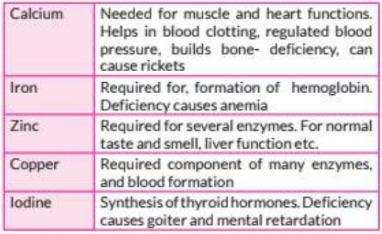
View AnswerAns. Minerals: Minerals are an important constituent of our diet. Some of the important minerals required by our body are iron, calcium, phosphorus, sodium, magnesium, potassium, zinc and sulphur. Some minerals are required in extremely small quantities these are called micro-minerals. The important aspects about minerals nutrition are-
(i) Minerals are very essential in our diet
(ii) About 4% of our body weight is made up of different minerals
(iii) Minerals are essential for healthy teeth, bones and muscles
(iv) They are essential for transmission of nerve impulse, formation of enzymes, hormones and maintenance of healthy blood pressure and regular heart beat
(v) Deficiency of particular minerals can cause a deficiency disease
Some of the important minerals and their uses are as follows:
40. Briefly explain the functions and resources of three fat soluble vitamins.
View AnswerAns. Fat-soluble vitamins include vitamins A, D, E, and K. Fat-soluble vitamins are stored in the body cells and are not passed out of the body as easily as water-soluble vitamins. They are more likely to reach toxic levels if a person takes in too much of these vitamins.
A wide variety of foods provide vitamin A. These include carrots, pumpkin, winter squash, dark green leafy vegetables and apricots.
The food sources of vitamin D are milk and other dairy products, fish oil.
41. Enlist the nutritive and non-nutritive components of diet and write about any two nutritive components in detail.
OR
What are the Nutritive and Non-nutritive components of diet? Explain.
View AnswerAns. The two important components of a diet are-
(a) Nutritive Components of the diet: Provide nutrition, example carbohydrates, proteis, fats, vitamins and minerals. Nutritive Components of Diet can be further segregated as macro-nutrients and micro nutrients.
Macro-Nutrients: Nutrients which are required by the human body in larger quantities are known as macro- nutrients. It is due to their importance, they are required in more quantities. Macro-nutrients serve as the raw material for growth and maintenance. Macro-nutrients consist of Fat, Proteins, Carbohydrates.
Micronutrients are required in very small amounts by our body. However, they are extremely important for our normal body functions. Various important chemical reactions in our body can only happen in the active participation of some of these micro nutrients. These include vitamins and minerals.
(b) Non-Nutritive Components of Diet
Non-Nutritive compounds of the diet include roughage (fiber), water, colour, flavor, etc. Though referred to as non-nutritive, roughage facilitates production of certain nutrients in the large intestine. Non-nutritive components are a part of our food for many reasons such as:
(i) water is required to give correct texture to food or to cook it
(ii) colours are added to make the food attractive
(iii) flavors are added to provide the right taste to the food.
(iv) Roughage facilitates the movement of the contents of the alimentary tract and facilitate the synthesis of certain nutrients.
42. ______________ refers to inability to digest particular kind of food
(a) Food Myths
(b) Food Intolerance
(c) Food Tolerance
(d) Healthy Food
View AnswerAns. (b) Food Intolerance
43. Given below are the two statements labelled Assertion (A) and Reason (R):
Assertion (A): Consuming food that are low in calories and fat, and increasing in physical activity will help in maintaining a healthy weight.
Reason (R): There are several ways of assessing a healthy body weight that include weight and height chart, Body Mass Index (BMI) or assessment of body fat percentage.
In the context of above two statements, which one of the following correct-
(a) Both (A) and (R) are true and (R) is the correct explanation of (A)
(b) Both (A) and (R) are true but (R) is not the correct explanation of (A)
(c) (A) is true, but (R) is false
(d) (A) is false, but (R) is true
View AnswerAns. (b) Both (A) and (R) are true but (R) is not the correct explanation of (A)
44. Which statement is not true about food myths?
(a) Don’t drink water during meal
(b) Eating potatoes increases obesity
(c) The fewer the carbohydrates, healtheir you are
(d) Vitamins are essential for your body
View AnswerAns. (d) Vitamins are essential for your body
45. The XYZ school conducted a research in their school and checked the BMI of all students and they have shared their findings as depicted in the figure:
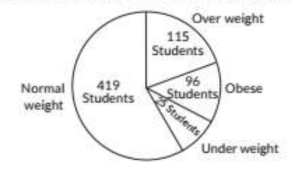
According to the above data, how many students are at risk of their health
(a) 419
(b) 211
(c) 121
(d) 236
View AnswerAns. (d) 236
46. What do you mean by Dieting?
View AnswerAns. Dieting means restricting to small amount of food intake or having special kind of food in order to lose/gain or maintain weight.
47. What do you mean by food intolerance?
View AnswerAns. Food intolerance is the inability of a person to digest a food, with discomfort or some adverse effects. This intolerance is often due to reaction to some chemical in diet or difficulty in its digestion. Sometimes food additives. preservatives, colouring additives and flavoring materials of natural or artificial origin, can cause food intolerance. Food intolerance generally takes more time to show up as compared to food allergy.
In many cases of food intolerance, people can tolerate a reasonable amount of the food, but if they eat too much (or too often) they get symptoms because their body cannot tolerate larger amounts of it.
48. Sunita is a state level Judo player, who reduces her diet to control her weight. Her coach advised her about pitfalls of dieting and recommended her to take sufficient amount of simple carbohydrates, fats, proteins, vitamins and minerals.
Based on this case, answer the following questions.
(i) Glucose, fructose and lactose are ________________
(a) Simple carbohydrates
(b) Complex carbohydrates
(c) Vitamins
(d) Minerals
View AnswerAns. (a) Simple carbohydrates
(ii) ____________ are known as body building foods.
(a) Carbohydrates
(b) Fats
(c) Proteins
(d) Minerals
View AnswerAns. (c) Proteins
(ii) Following are pitfalls of dieting, except
(a) Loss of weight
(b) Anemia
(c) Loss of energy
(d) Healthy weight.
View AnswerAns. (d) Healthy weight.
49. What do you understand by food myths?
OR
What do you understand by Food Myths? Discuss briefly about various Food Myths.
View AnswerAns. Myths can be described as widely held but false belief or idea. There are various types of food myths that are common in different societies in India and in other parts of the world.
(a) Myth: Drinking water while eating makes you fat: Fact: Drinking water while eating can slow digestion. It is better to drink water before eating because in addition to protecting the stomach walls, it helps make us feel fuller and prevents us from overeating. There are two opposing sides of the argument regarding if it’s good to drink water while eating. There’s no concern that water will dilute the digestive juices or interfere with digestion. In fact, drinking water during or after a meal actually aids digestion. Water and other liquids help break down food so that our body can absorb the nutrients. Water also softens stool, which helps prevent constipation.
(b) Myth: Do not take milk immediately after eating fish: as it will lead to white patches on the skin. Fact: If the fish preparation has too much of chillies, drinking milk after it may lead to issues like indigestion or acid reflux. Adverse side effects or white patchy skin has not been reported after eating milk or cream based fish preparations.
(c) Myth: Exercise makes you eat more and will make you fat.
Fact: Exercising burns calories which increases hunger leading to eating more nutritious food. Studies do not prove that the people who do exercise, consume more calories than those who do not exercise.
50. What are the pitfalls of dieting?
View AnswerAns. (i) Skipping Meals: Though to lose weight, we have to metabolise the food we eat. Hence consuming less food seems logical as then one does not have to metabolise it. However in practice when we skip meals the body automatically lowers the metabolic rate. This is our bodies natural response to food scarcity. Hence skipping meals works against weight reduction plans.
(ii) Intake of calories through drinking: When we wish to lose weight we are often careful about what we eat and ignore our calorie intake of our drinks. In fact, beverages, coffee with cream and sugar, sweetened juices and sodas really contribute to large amounts of calorie intake and weight gain.
(iii) Underestimating the calories: It is a fact that most of the people who go on dieting usually underestimate the number of calories they consume. So, it is essential to be more aware about the number of calories you take in the solid and liquid food intake.
(iv) Intake of labelled foods: Many of the claims of low calorie or fat free drinks or food items cannot be justified. People also tend to overeat these food imagining that these are very healthy. This often proves to be wrong and one ends up eating more of these foods.
51. Briefly explain the following:
(i) Vitamins
(ii) A healthy weight
(iii) The pitfalls of dieting
(iv) Food intolerance
(v) Food Myths
View AnswerAns. The following terms can be defined as follows: (i) Vitamins: Vitamins are the chemicals which our body needs in small amounts to function properly. They work in a variety of ways, mostly as ‘helpers: Like some of the B-vitamins help the body by improving digestive system, nerve system etc. Another example is vitamin K is needed for proper blood clotting, vitamin E protects cell walls etc. Vitamins are divided into two categories: water soluble and fat soluble.
(ii) A healthy weight: A healthy weight is a person’s weight that lowers risk of health problems like heart diseases, bone diseases etc. BMI is a good indicator for healthy weight. A healthy weight is considered to be one that is between 19 and 25 (BMI). If the BMI is between 25- 29 an adult is considered overweight. If the BMI is 30 or greater, the person is considered to be obese”.
(iii) The pitfalls of dieting: Actual meaning of pitfall is “danger or problem in situation” as pitfalls of dieting implies that dieting does not give advantages due to lack of many nutrition. Even science has proved that dieting causes many mental and physical problems.
(iv) Food intolerance: It is the non-allergic food hypersensitivity, which is characterised by difficulty in digesting certain foods. Food intolerance is different from food allergy. Food allergies trigger the immune system, while food intolerance does not. The symptoms of food intolerance generally take longer to emerge, compared to food allergies. In food intolerance, some people suffer digestive problems after eating certain foods. Foods most commonly associated with food intolerance include dairy products, grains that contain gluten, and foods that cause intestinal gas build-up, such as beans and cabbage.
(v) Food myths: A food myth is a misconception or unfounded idea about food in general. It may lead people to follow the latest trendy diet. It could involve cutting a completely nutritious food out of your daily eating regimen because you think it’s bad for you. It’s often an entirely untrue statement that’s got to be busted. There are various types of food myths that are common in all societies in India and in other parts of the world. Like, do not take milk immediately after having fish as it will lead to white patches on the skin but actually many traditional fish preparations are made using curd which is a milk product.
Another example like potatoes make you fat but actually these are good and economical source of carbohydrate and there is no problem if these are taken in moderation.
52. What do you mean by ‘Healthy-Weight’? Explain the methods to control ‘Healthy Body Weight to lead healthful-living!
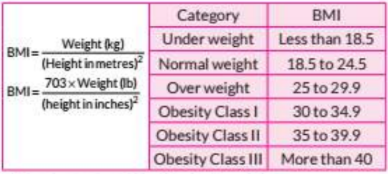
View AnswerAns. A healthy weight is a person’s weight that lowers his/her risk for health problems such as heart diseases, high blood pressure, diabetes, etc. For most people, Body mass index (BMI), healthy weight are good indicators for determination of healthy weight. A simple look at the height and body chart can easily give us a fair idea about the status of one’s healthy weight (or otherwise).
Another way of judging a person’s health is to calculate the BMI.
Method to calculate healthy weight-
Methods to Control healthy body weight
(a) Set appropriate goal, based on BMI calculations. Thus the stress is on health rather than on just weight reduction. Plan physical activities according to facilities available to you.
(b) Take balanced diet. It is always beneficial to plan according to the locally available food items. Drink adequate amounts of water.
(c) Eat more fibrous food and do not skip meals. Cut down calorie intake particularly from food items that are low on nutrients.
(d) Follow active lifestyle. Take support of family and friends.
(e) Do yogic exercise. This helps in physical health and improves mental health by reducing stress.
(f) Avoid alcohol, drugs and smoking.
(g) Do regular physical exercise. Balance intake and expenditure of calories.
(h) Go for regular medical check.
53. Discuss about meal intake guidelines, for pre, during and post sports event.
View AnswerAns. For a sportsperson athlete, it is essential to take a balanced diet as lot of physical activity and endurance is needed in sports.
(i) Nutrition before competition: At least a week before the competition sportsperson should take complex carbohydrate food which usually helps in increasing glycogen store. The fuel for the muscle is usually provided in meals 3-4 days prior to the competition. The diet should depend on the intensity of the activity. The diet should be rich carbohydrate, low in fat and protein. Two hours before the competition a high carbohydrate energy drink can be considered sufficient.
(ii) Nutrition during competition: It is important to stay hydrated and maintain sugar level so that sportsperson may not undergo fatigue. If the duration of the competition is more than 60 mins than % to 1 cup carbohydrate drink after 10-20 mins and if the duration is less than 60 mins than carbohydrate drink after every 20-30 mins.
(iii) Nutrition after competition: After competition it is important to recover properly, so the first preference should be given to replacement of fluid loss and this can be easily done by the intake of water or replacement drink. Meals after competition should be taken within 2 hours. For best glycogen restoration 100-200 grams of carbohydrate along with lean protein like meat or chicken should be taken. It will help in building, maintaining, and repairing of muscles. At least 20 grams of protein is required after completion for complete recovery.
1. Slow twitch fibres are, ____________ in colour.
(a) White
(b) Red
(c) Transparent
(d) Brown
View AnswerAns. (b) Red
2. Which amongst these is not a micro mineral?
(a) lodine
(b) Magnesium
(c) Iron
(d) Copper
View AnswerAns. (b) Magnesium
3. Given below are the two statements labelled Assertion (A) and Reason (R).
Assertion (A): UNICEF says that water is not included in macro nutrients but USDA includes it as part of macronutrients.
Reason (R): Water must be taken in large quantities therefore it can be considered a macronutrient.
(a) Both (A) and (R) are true, but (R) is not the correct explanation of (A).
(b) (A) is true, but (R) is false.
(c) Both (A) and (R) are true and (R) is the correct explanation of (A).
(d) (A) is false, but (R) is true.
View AnswerAns. (c) Both (A) and (R) are true and (R) is the correct explanation of (A).
4. Carbohydrates which are soluble in water and crystalline in structure.
(a) Simple
(b) Complex
(c) Compound
(d) Complicated
View AnswerAns. (a) Simple
5. What is the other name for Vitamin B2?
(a) Niacin
(b) Thiamin
(c) Folic Acid
(d) Riboflavin
View AnswerAns. (d) Riboflavin
6. Which amongst these is not a macro mineral?
(a) Calcium
(b) Potassium
(c) Phosphorus
(d) lodine
View AnswerAns. (d) lodine
7. Who discovered Vitamin A?
(a) Dr. McCollum
(b) Dr. Coubertin
(c) Dr. J.B.Nash
(d) Dr. Harvard
View AnswerAns. (a) Dr. McCollum
8. What according to you is the main cause for night blindness?
(a) Deficiency of Vit. E
(b) Deficiency of Vit. C
(c) Deficiency of Vit. A
(d) Deficiency of Vit. D
View AnswerAns. (c) Deficiency of Vit. A
9. What is the ratio of carbon, hydrogen and oxygen in carbohydrates?
(a) 1:2:1
(b) 2:2:1
(c) 2:1:1
(d) 1:2:2
View AnswerAns. (a) 1:2:1
10. Match the following:
1. Vitamin B12 (A) Thiamin
2. Vitamin B3 (B) Biotin
3. Vitamin B7 (C) Cobalamin
4. Vitamin B1 (D) Niacin
Select the correct answer:
(a) 1 – A, 2 – B, 3 – C, 4 – D
(b) 1 – C, 2 – D, 3 – B, 4 – A
(c) 1 – D, 2 – C, 3 – A, 4 – B
(d) 1 – A, 2 – C, 3 – D, 4 – B
View AnswerAns. (b) 1 – C, 2 – D, 3 – B, 4 – A
11. Which statement is not true about protein?
(a) Protein forms new tissues
(b) Protein regulates the balance of water and acids
(c) Protein helps in production of hormones.
(d) Protein makes antibodies.
View AnswerAns. (c) Protein helps in production of hormones.
12. Match the following vitamin with the disease caused due to their deficiency
1. Vitamin A (A) Rickets
2. Vitamin B (B) Night blindness
3. Vitamin C (C) Beriberi
4. Vitamin D (D) Scurvy
Select the correct answer:
(a) 1 – A, 2 – B, 3 – C, 4 – D
(b) 1 – B, 2 – C, 3 – D, 4 – A
(c) 1 – B, 2 – A, 3 – C, 4 – D
(d) 1 – C, 2 – B, 3 – A, 4 – D
View AnswerAns. (b) 1 – B, 2 – C, 3 – D, 4 – A
13. Jatin is a weightlifter in the 96 kg category. He has to participate in a weightlifting competition next week for which he is taking good care of his practice and diet. He has included all the essential nutrients in his diet. Based on this case, answer the following questions. What do you think would be the most important component of Jatin’s diet?
(a) Proteins
(b) Carbohydrates
(c) Vitamins
(d) Minerals
View AnswerAns. (a) Proteins
14. Match List – I with List – II and select the correct answer from the code given below:
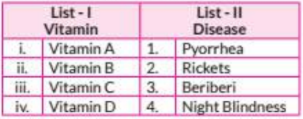
(a) i – 2, ii – 4, iii – 3, iv – 1
(b) i – 1, ii – 2, iii – 4, iv – 3
(c) i – 4, ii – 3, iii – 1, iv – 2
(d) i – 3, ii – 1, iii – 2, iv – 4
View AnswerAns. (c) i – 4, ii – 3, iii – 1, iv – 2
15. What are carbohydrates? Differentiate between its types.
View AnswerAns. Carbohydrates are organic compounds made up of Carbon, Hydrogen and Oxygen. Carbohydrates are a major source of energy Carbohydrates. Monosaccharide, disaccharides and polysaccharides Simple sugars (mono and disaccharides) are found in fruits (sucrose, glucose and fructose), milk (lactose) and sweets that are produced commercially and added to foods to sweeten, prevent spoilage, or improve structure and texture.
Polysaccharides are more than two units of monosaccharide joined together. These are Starches and fibre (cellulose). These are also called complex sugars and are found in whole grain cereals, rice, oats, potatoes, bread, legumes, corn and flour.
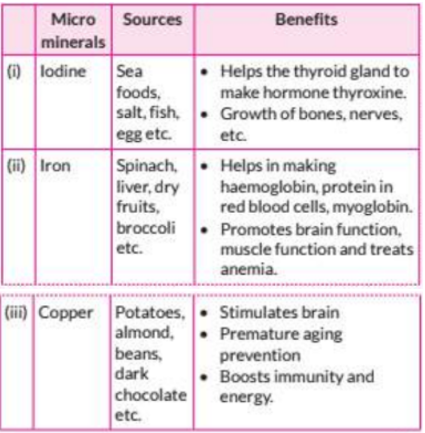
16. Compare any three Micro minerals on the basis of their sources and benefits.
View AnswerAns.
17. Compare any three fat soluble vitamins on the basis of their sources and benefits.
View AnswerAns. Fat soluble vitamins:
(i) Vit A: Night blindness, Xerophthalmia (papaya,spinach,milk,curd,carrot)
(ii) Vit D:Teeth,bones.calcium (sunlight,milk,egg yolk)
(iii) Vit E : Fertility.Adreline gland,skin (fresh fruits,butter,cotton seeds)
(iv) Vit K: Clotting of blood, anemia (cauliflower, cabbage, spinach)
18. Calculate the BMI of a girl and identify the category if her weight is 68 kg and height is 161 cm.
(a) Underweight
(b) Normal weight
(c) Overweight
(d) Obesity class I
View AnswerAns. (c) Overweight
19. Below given is the BMI data of a school’s health check up
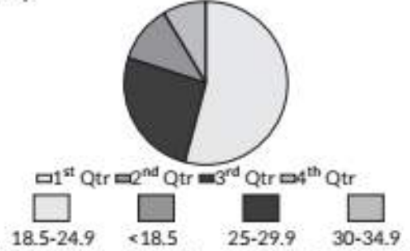
On the basis of the above data answer the following questions:
i. In which category does the major student population falls into?
(a) Obese
(b) Normal weight
(c) Under weight
(d) Over weight
ii. The school has to develop an activity based program to decrease the number of:

iii. Which category is related to underweight?
