1. According to W.H.O. (World Health Organisation) recommendations, children of _____________ should be engaged in physical activities for 180 minutes and should have 10-13 hours of good quality sleep per day.
(a) Less than 1 year
(b) 1-2 year
(c) 3-4 year
(d) 5-17 year
View AnswerAns. (c) 3-4 year
2. Write a short note on ‘Menarche’.
View AnswerAns.
– First menstruation cycle of a girl
– Point of sexual maturity of girl
– Average age for a girl to get her first period ranges from 8-15yrs.age.
3. Write short note on Female Athlete Triad.
View AnswerAns. Female athlete triad
1. Eating disorders (Low Energy Availability)
Eating disorders are mainly of two types:
Anorexia nervosa
Anorexia nervosa is one type of eating disorder in which a person severely limits the amount of food he or she eats to prevent weight gain or lose weight.
Bulimia nervosa
Bulimia nervosa is an eating disorder in which a person eats a large amount of food in a short amount of time and gets rid of the food consumed. This may be done by vomiting or taking laxatives.
2. Amenorrhea (Disruption of Menstrual and Endocrine Function)
Long absence of no menstrual periods is called amenorrhea. It is the state of a woman, where there is no monthly cycle despite reproductive age, or absence of menstrual cycle for three or more months.
There are two main types of amenorrhea:
Primary amenorrhea. When the first menstrual bleeding at puberty does not start by the age 15 years.
Secondary amenorrhea. When normal menstrual bleeding stops for 3 months or more.
3. Osteoporosis (Loss of Bone Mineral Density)
This is the condition when bones lose minerals such as calcium, more quickly than the body can replace them leading to a loss of bone thickness (bone density). Any bone can be affected by osteoporosis but the most common sites are the hip, spine, wrist, upper arm, forearm or ribs.
1. Given below are the two statements labelled as Assertion(A) and Reason (R).
Assertion (A):”Achieving health for all means doing what is best for health right from the beginning of people’s lives” says WHO Director General Dr. Tedros Adhanom Ghebreyesus.
Reason (R): For children, at least 180 minutes of physical activities of which 60 minutes is moderate to vigorous intensity physical activity should be planned. In the context of the above two statements, which one of the following is correct?
(a) Both (A) and (R) are true and (R) is the correct explanation of (A).
(b) Both (A) and (R) are true but (R) is not the correct explanation of (A).
(c) (A) is true, but (R) is false.
(d) (A) is false, but (R) is true.
View AnswerAns. (b) Both (A) and (R) are true but (R) is not the correct explanation of (A).
2. Suggest physical exercises for childhood and adulthood.
View AnswerAns. Physical exercises for childhood:
(i) For vigorous activities-running or soccer
(ii) For strengthening muscles – climbing or push ups
(iii) For strengthening bones – gymnastics or jumping rope
Physical exercises for adulthood:
(i) At least 150 minutes a week of moderate intensity activity such as brisk walking.
(ii) To improve balance-standing on one foot
(ii) To strengthen muscle – push ups
3. Describe exercise guidelines at different stages of growth in children, Give suitable examples for every stage.
View AnswerAns. Exercise guidelines at different stages of growth and Development:
Guidelines in Infancy (1 to 3 years): Here the purpose of the exercise is
(a) To develop head control, to ensure that the baby sits and crawls
(b) To promote gross motor activities
(c) The exercises should include moving of arms, reaching out to objects
(d) Throwing, stopping, picking the ball etc.
Babies should be encouraged to be active in all its waking hours. It should be encouraged to reach out, grasp things pulling, pushing and more importantly moving their head and limbs. When they begin to crawl they should be encouraged to chase a rolling ball etc., in a safe and supervised encouraging environment.
Toddlers: Children who can walk on their own should be encouraged to be physically active for over 180 minutes spread throughout the day. It can include light activity such as standing up, moving around, rolling and playing. as well as more energetic activity like skipping, hopping. running and jumping. Energetic activities also include climbing a frame, riding a bike, playing in water, chasing games and ball games.
Children under five should not be inactive for long periods, in their waking hours.
Early Childhood (4-7 years)
As the children grow gradually the emphasis shifts on competence in the various movement skills such as throwing, jumping, kicking, running etc. Group activities must be given more importance and stress should also be laid on development of ‘fine motor skills’ and coordination of movement. Spread over the day children should participate in physical activities for at least 60 minutes every day.
Late Childhood (8 to 12 years)
As children become physically stronger their body movements become more controlled leading to precise and accurate outputs. They should be encouraged to participate in competitive sporting events of their choice and participate in team games.
At this age they can be introduced to the concept of sports training. It is the time for the instructors and parents to spot special sporting or athletic talent in the children at this age that can be nurtured.
Adolescence (13 to 19 years)
Exercises of moderate to high intensity are recommended with increasing age. They should understand about and do stamina building, muscle strengthening as well as bone strengthening exercises. Children should actively participate in moderate to intense exercise for 60 minutes every day. They must also be taught about correct nutrition before and after exercising.
(d) They should also do stamina building exercises. Adulthood
Adults should find enough time to indulge in regular physical activities. To stay healthy or improve health, adults need to do two types of physical activity each week: aerobic and strength exercises.
They should at least do 150 minutes of moderate aerobic activity such as cycling or brisk walking every week, and strength exercises on two or more days a week that work all the major muscles (legs, hips, back, abdomen, chest, shoulders and arms)
4. Exercises have numerous physiological and physical benefits on children. Explain in detail.
View AnswerAns. The various advantages of exercising are as follows:
(a) Improves Posture and helps us to get in to shape: With weight training we not only improve muscular strength but also get into better shape quickly by developing appropriate muscles. This improves the athletic ability and also improves the body posture.
(b) Increases muscles strength, bone density and endurance: As we age, we naturally lose muscle and bone mass. This is even more important for women, as their bones are as such smaller and can become dangerously weakened by age. Weight training can help to fight this. Men and women both benefit tremendously by doing weight training in terms of muscular strength and improved bone density.
(c) Improves motor performance: Exercising with weights improves muscle tone and muscular strength. When we are able to employ the proper muscles in the right sequence, our motor functions are smooth and we can perform the functions seamlessly.
(d) Maintain Healthy Weight: It is proven from studies that type II muscle fibers, the kind we build when we lift weights, improve whole-body metabolism. The researchers concluded that an increase in type II muscle fibers can reduce body fat without changes in diet and might be effective in the fight against obesity.
(e) Lowers Diabetes risk: Now a study has found that men who lifted weights for 150 minutes each week-about five 30-minute sessions – had a 34-percent lower risk of type 2 diabetes.
(f) Reduces depression and improves happiness: Exercise both aerobics and weight training not only improve health but also make the practitioners happy.
Thereby preventing negative thoughts. Because weight training produces quicker results the positive psychological effects also happen sooner.
(g) Promote and develops exercise habits: Weight training brings relatively quick results if supported with a correct diet plan. Looking at the results people continue with their exercises. It also motivates others to take up doing exercise.
(h) Improve performance in sporting activities: Whether one plays cricket, basketball or hockey weight training always translates to better stamina and performance. Weight training also improves dexterity, endurance and hand-eye coordination. When a cricketer plays a long innings of five hours or bowls for thirty overs in a day his/ her cricketing skills will have to be backed by stamina and strength of his/her muscles. The same is true for any other sport.
5. Explain different developmental characteristics for childhood.
View AnswerAns. Different stages of growth in children are:
(i) Infancy (ii) Early childhood and (iii) Late childhood.
(i) Infancy-developments
(a) Gross motor development skills
(b) Head Control
(c) Sitting
(d) Crawling
(e) Moving arms, legs
(f) Reaching to various objects
(g) Infants should be provided with objects, toys and games
(h) Throwing, Catching and kicking a ball.
(ii) Early Childhood-developments
(a) Fine motors developmental skills i.e. coordinative activities.
(b) Movement skills (throwing, jumping catching or kicking the ball)
(c) Emphasis on participation and not on competition.
(d) Structured as well as unstructured physical activities should be performed daily for at least sixty minutes.
(e) They may be allowed to watch quality programmes on T.V. for one to two hours.
(iii) Late Childhood-developments
(a) Stunts, throwing, jumping, catching, running etc so that they can acquire body control.
(b) Participation in organized or team games which aim to develop social consciousness in them.
(c) Children should be introduced to competitive sports and taught the basic rules of sports competition.
(d) Introduction of concept of endurance, strength, agility, coordination and balance.
6. Match the following
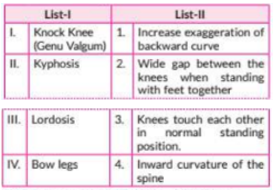
Choose the correct option from the following:
(a) I – (3), II – (1), III – (4), IV – 2
(b) I – (1), II – (3), III – (4), IV – 2
(c) I – (4), II – (2), III – (1), IV – 3
(d) I – (2), II – (3), III – (4), IV – 1
View AnswerAns. (a) I – (3), II – (1), III – (4), IV – 2
7. Floor based physical activities should be planned for
(a) less than 1 year child
(b) 1-2 year child
(c) 3-4 years child
(d) 5-17 years child
View AnswerAns. (a): less than 1 year child
8. Which postural deformity is shown in the illustration?
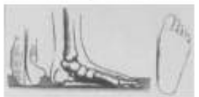
(a) Bow legs
(b) Knock Knee
(c) Flat Foot
(d) Round Foot
View AnswerAns. (c): Flat Foot
9. “Sway Back” is also known as
(a) Lordosis
(b) Kyphosis
(c) Scoliosis
(d) Round shoulder
View AnswerAns. (a): Lordosis
10. Asanas show in the picture are performed to correct.
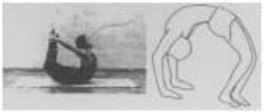
(a) Kyphosis and Lordosis
(b) Round shoulder and Kyphosis
(c) Scoliosis and Lordosis
(d) Lordosis and Round shoulder
View AnswerAns. (b): Round shoulder and Kyphosis
11. Match the following postural deformities with their corrective Asanas.
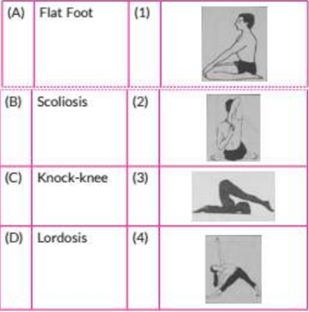
Select the correct answer.
(a) A – 1, B – 4, C – 3, D – 2
(b) A – 2, B – 3, C – 1, D – 4
(c) A – 2, B – 1, C – 3, D – 4
(d) A – 1, B – 4, C – 2, D – 3
View AnswerAns. (d) A – 1, B – 4, C – 2, D – 3
Scoliosis is a postural deformity related with
(a) foot
(b) leg
(c) vertebral column
(d) hand
View AnswerAns. (c): vertebral column
13. What is the main cause of ‘Scoliosis’?
View AnswerAns. Scoliosis is injury of the bones and joints. It is caused by faulty posture, weakness or paralysis of the muscles. Diseases like TB or rickets carrying/lifting heavy loads, or heredity can also cause scoliosis.
14. What is Lordosis? Explain.
View AnswerAns. Lordosis is also called swayback, the spine of a person with lordosis curves significantly inward at the lower back.
– Appearing swayback, the buttocks of these people are more pronounced.
– Having a large gap between the lower back and the floor when lying on your back on a hard surface that does not change when you bend forward.
– Causes back pain and discomfort
– Causes problems in moving certain ways
The following conditions can cause lordosis:
(a) Achondroplasia: A disorder in which bones do not grow normally, resulting in the short stature associated with dwarfism
(b) Spondylolisthesis: A condition in which a vertebrae, usually in the lower back, slips forward
(c) Osteoporosis, a condition in which vertebrae become fragile and can be easily broken (compression fractures)
(d) Obesity, or being extremely overweight
(e) Kyphosis: A condition marked by an abnormally rounded upper back
(f) Discitis: Inflammation of the disc space between the bones of the spine most often caused by infection
15. State the common postural deformities.
View AnswerAns. The common postural deformities include the following:
Knock-knees, flat foot, round shoulders, lordosis, kyphosis etc.
16. Suggest two exercises for correcting flat foot.
View AnswerAns. Exercises for correcting flat foot are:
(i) Arch lifts
(ii) Heel raises
(iii) Towel pickup
(iv) Calf stretch
17. What is “an abnormal curvature of spine at front” termed as?
View AnswerAns. “An abnormal curvature of spine at front” is termed as Scoliosis.
18. Define flat foot.
View AnswerAns. Flat feet (also called pes planus or fallen arches) is a postural deformity in which the arches of the foot collapse, with the entire sole of the foot coming into complete or near-complete contact with the ground. It may be present in one or both the feet.
Flat feet is normal in infants and usually disappears by age 2 or 3 years as the ligaments and tendons in the foot and leg tighten. But, some cases it can last through adulthood.
19. What do you understand by round shoulders deformity? Suggest any four corrective measures for round shoulders.
OR
What do you mean by ‘Round shoulders’? Suggest any four physical activities for correcting round shoulders.
View AnswerAns. The term “round shoulders” is commonly used to describe a situation where the shoulder girdle is protracted (further forward) than normal often accompanied by a thoracic kyphosis (upper back bent forward). It happens when the resting shoulder position has moved forward from its ideal alignment. (see image)
Corrective measures for Rounded shoulders
Doorway Chest and Shoulder Stretch exercises are used to get rid of Rounded Shoulders.
This is an effective stretch to improve the posture and release tension from the upper back as well as to get rid of rounded shoulders.
(a) It should be done with each arm separately
(b) It should be done with both the arms together
(c) Important asana suggested include Half bhujangasana and Bhujangasana
(d) Important asana suggested include Chakrasana and Dhanurasana
(e) Keep fingertips on your shoulders and rotate elbows in clockwise and anticlockwise direction.
20. Participation in physical activities can be utilised as corrective measures for correcting postural deformities among children. Justify.
View AnswerAns. Faulty posture postural deviation can happen in the muscles or the bones or both, with either an increase or decrease of the normal body curves. It leads to painful conditions because of –
- Uneven pressure within the joint surfaces
- Ligaments will be under strain
- Muscles may need to work harder (to hold the body upright)
The role of correct posture, special physical activities etc., have a significant role in preventing and in many cases correcting the postural deformities. The following are the important benefits of doing physical activities.
(a) Muscle health: Maintaining proper alignment and good posture allows the muscles to work as they were built to work. This keeps the muscles healthy. Maintaining alignment also allow the muscles to work efficiently which can prevent muscle aches and muscle fatigue.
(b) Breathing well: Good posture allows the body to maintain straight alignment which helps with breathing by not constricting airways. Constricted airways can impact the oxygen levels. Good flow of oxygen allows blood to carry oxygen to our organs, nervous systems, as well as tissues and muscles-all important to maintain a healthy body.
(c) Good Circulation: Poor posture has been said to fatigue the muscles and compress the blood vessels responsible for supplying the muscles with blood.
(d) Preventing bone wear and arthritis: Good posture has a domino effect on our bodies. Good posture maintains muscles and ligaments aligned. The correct alignment keeps joints from rubbing or moving in ways which could lead to arthritis. With right alignment of bones and joints the muscles are used properly which prevents abnormal wearing of joint surfaces.
21. Explain the causes and corrective measures for knock-knee and scoliosis.
View AnswerAns. Causes of knock-knee:
(i) Faulty standing posture
(ii) Rickets
(iii) Obesity
(iv) Weakness of muscles and ligaments of knee region.
(v) Wearing improper shoes.
(vi) Carrying heavy weight at early age.
(vii) Deficiency of vitamin D, calcium and phosphorus.
(At two points with explanation. If only point mentioned give 1/4 for each point)
Corrective measures for knock knee:
(i) Horse riding
(ii) Padmasana and Gomukhasana
(iii) Keeping pillow between the knee while standing.
(iv) Use of walking calipers
(v) Walking along a straight line with knee facing outwards.
(vi) Side kicking in football.
(viii) Supplements as advised by doctor.
(Any three points with explanation. If only point mentioned give 1/4 for each point)
Causes of Scoliosis:
(i) Weakening of spinal muscle in one side
(ii) Due to infantile paralysis, rickets
(iii) Heavy load on shoulder
(iv) Due to Some diseases or injuries such as cerebral palsy.
(v) Due to poor light
(vi) Wrong habit of sitting/Wrong sitting posture
(vii) Partial deafness
(vii) May be congenital or acquired abnormalities of vertebras
(Any two points)
Corrective measures for Scoliosis:
(i) Breast Stroke in Swimming
(ii) Pull-ups/Hanging on Horizontal Bar
(iii) Banding exercise on the opposite side of ‘C’ curve.
(iv) Flexion, extension, side ward flexion of the spine
(Or any relevant corrective measures (Any three points)
22. Explain ‘Flat Foot’ and ‘Knock Knees’ and also suggest corrective measures for both postural deformities.
View AnswerAns. Flat foot: It is a deformity in the feet. There is no arch in the foot and the foot is completely flat which may cause pain in the foot. An individual with this deformity faces problem in standing, walking, jumping and running Corrective measures for Flat foot:
(i) Jumping on toes
(ii) Rope skipping
(iii) Walk on toes
(iv) Stand up and down on heels
(v) Walk on heels
(vi) Walking on inner and outer side of foot
(vii) Perform Vajrasana and Yogic exercises.
Knock knees: It is a postural deformity in which both the knees touch or overlap each other in normal standing position. Due to this deformity an individual usually faces difficulty in walking.
Corrective measures for Knock Knees:
(i) Horse riding is one of the best exercise
(ii) Keep a pillow between the knees and stand for some time every day.
(iii) Use of walking caliper may be beneficial.
Perform Padmasana and Gomukhasana.
23. What are the causes of ‘Flat-Foot’ and ‘Knock-Knees’? Suggest physical activities as corrective measures for these deformities.
View AnswerAns. Causes of Flat Feet:
– Flat feet are related to the tissues and bones in the feet and lower legs. The condition is normal in babies and toddlers because it takes time for the tendons to tighten and form an arch.
– In few cases, the bones in a child’s feet become fused, causing pain.
– When the tendons do not tighten fully it can result in flat feet. With aging or in case of injuries the tendons in one or both feet can get damaged.
– The condition is also associated with diseases such as cerebral palsy and muscular dystrophy.
– Flat feet often run in the family hence it is genetic.
– Highly athletic and physically active people sometimes get it because of injuries in the foot and ankle.
– Old age people who are prone to falls or physical injury are also more at risk.
Other risk factors include obesity, hypertension, and diabetes mellitus.
Corrective measures
(a) Employ orthopedic arch-supporting shoe inserts after consulting doctors.
(b) Switching footwear frequently, so that the feet do not adopt a particular shape because of your specific shoes particularly during physical exercises helps.
(c) Lose weight carrying excess weight on your body exerts excess pressure on your feet and can exacerbate flat feet. A study published in a 2006 issue of “Obesity,” found that children who were overweight had significantly lower arches than children who were at a healthier weight.
Causes of Knock-knee
- Knock-knee is quite often a symptom linked to heredity
- It can be caused by poor nutrition
- Obesity is a major cause of knock-knee
- Injury of shinbone may cause knock-knee, may be in one leg
- Rickets – (Calcium and vitamin D deficiency) can also cause knock-knee.
Osteomyelitis (bone infection)
Corrective measures for Knock-knee:
(a) Some remedies such as horse riding and keeping pillows between the knees has been practiced. However, doctors are not known to suggest this measure. Walking calipers are most helpful as these can be calibrated according to individual need and improvements.
(b) Yoga postures such as Padmasana and Gomukhasana has been suggested by physiotherapist. In any case these must be done under the guidance of doctors.
24. Suggest five exercises as corrective measures for Round Shoulders.
View AnswerAns. Corrective measures for round shoulders:
Doorway Chest and Shoulder Stretch exercises are used to get rid of round shoulders.
This is an effective stretch to improve the posture and release tension from the upper back as well as to get rid of rounded shoulders.
(a) It should be done with each arm separately
(b) It should be done with both the arms together
(c) Important asana suggested include Half bhujangasana and Bhujangasana
(d) Important asana suggested include Chakrasana and Dhanurasana
(e) Keep fingertips on your shoulders and rotate elbows
in clockwise and anticlockwise direction.
25. Following are the constraints for women which restrict their participation in sports, except –
(a) Psychological constraints
(b) Social constraints
(c) Eating habits
(d) Economical constraints
View AnswerAns. (c): Eating habits
26. Mirabai Chanu is from a very simple family but she always used to dream big. Though she knew that her family would not be able to afford her nutrition still she continued to pursue her dreams, and finally the day came when she won the silver medal in weight-lifting in Tokyo Olympic. The women who got two medals in Olympics is –
(a) P.V. Singhu
(b) Lovlina Borgohain
(c) Sakshi Malik
(d) Mirabai Chanu
View AnswerAns. (a): P.V. Sindhu
27. Suggest any four ways through which women participation in sports across age group can be enhanced.
View AnswerAns. Women participation in sports can be increased in the following ways.
(a) Removing physical and physiological constraints.
(b) Removing psychological constraints-such as avoiding anxiety, excess aggression.
(c) Dealing with economic constraints by providing budgets for sporting facilities for girls in schools and colleges.
(d) Raising spectator interest – with more coverage of women’s sports on television and other media by better sponsorship.
28. Comment on the outlook of Indian society towards the participation of women in sports.
View AnswerAns. According to Indian society:
(i) Sports is a male dominant field.
(ii) Women are expected to stay indoor since society still looks down on women for participation in sports
(iii) Personal safety on road, public transport and sports venues are persistent problems for women.
(iv) The physical stature of female is affected by sports and it is considered that involving in vigorous physical activity makes her infertile.
29. Keeping in view the Indian ideology, critically analyse the sociological aspect of participation by women athletes in sports
View AnswerAns. Constraints for women in sports participation
Participation of women in sports is poor because of various constraints and difficulties. Some of which are- Physiological constrains, Psychological constraints, physical constraints, social constrains.
Social Constraints
Social constraints refer to the behavior and interaction among the sports society. During training and competition, the relationship with coaches, arena persons, training- mates, co-participants, officials during competition affects the mental makeup of the participants. In case of any undue relationship or misbehavior – it leads to reduced sports performances and can even lead to termination from sports participation.
Some areas and some situations are considered unsafe for women’s free movement.
This may be because of unsafe modes of transportation and or inadequate support system.
Social taboos, gender roles and stereotypes make the girls do a lot of household work as compared to their male siblings. This leaves them very little or no time for sporting activities. Lack of support and encouragement from the family. At lower and middle level sports is generally male dominated. This includes general lack of women coaches and trainers. This discourages female participation at the entry levels.
30. How can women’s participation in sports and games be encouraged in India? Explain.
View AnswerAns. Women participation in sports can be increased in the following ways.
(a) Removing Physical and physiological Constraints.
(b) Removing psychological constraints-such as avoiding anxiety, excess aggression.
(c) Dealing with Economic constraints by providing budgets for sporting facilities for girls in schools and colleges.
(d) Raising spectator interest – with more coverage of women’s sports on television and other media by better sponsorship.
31. Give your outlook on participation of Indian women in sports.
View AnswerAns. Though sport is universal and theoretically does not discriminate between individuals on colour, caste, creed, gender or race, yet participation of women in sports is much less in most parts of the world. Very much so in India too. Women participation in sports has important consequences:
Participation of women in sports leads to their empowerment, their acquiring individual and team competency leading to health improvement. This has immense benefit for the family and the society. Sporting activities also help in women empowerment in every sense such as mental well-being, independence, peace of mind, increased concentration, fame, discipline, access to better education and employment.
Even when women-teams perform well there is a general lack of spectator interest in women’s sports. This leads to poor television coverage and poor sponsorships of the events and players. However, with newer role models emerging, this should change. Achievers like Karnam Malleshwari, Mary Kom, Saina Nehwal, Sakshi Malik, P.V. Sindhu, P.T. Usha, Jwala Gutta, Geeta Phogat, Sania Mirja have roused spectator interest in women sports. The achievements of the women’s cricket and hockey teams in recent times has also greatly popularised women’s sports both among the sponsors and the spectators. Increased spectator interest leads to
Better sponsorship Better prize money
More career opportunities
More tournament opportunities
Some of the important Indian female sportspersons who are idolised and have helped in popularising female participation in games and sports.
32. Women participation in sports is not encouraging. Identify and explain various sociological facts which might have effected women participation in sports.
View AnswerAns. The sociological aspect of women’s participation in sports is an important aspect that has a profound effect on their sports participation.
Socio-cultural and economic barrier-There is the idea that sport is a masculine activity. It has been a widely shared
perception propagated through traditions, beliefs and social practices. This belief pre-supposes that women should not be competitive and their body should not be muscular. Another barrier is the false correlation between participation in sport with socially unacceptable behaviors. Important sub factors that emerge are:
(a) Family: Family is the single most important factor that is responsible for sports socialization of girls. Usually in families all over the world and more so in India boys are encouraged more to take part in sporting activities. They are provided better facilities and have role models to emulate. Contrastingly girls are rarely encouraged to participate in sports.
Even in educated societies and those considered liberal women are encouraged to participate in sports such as gymnastics, athletics, dancing and rarely in wrestling. boxing weightlifting, etc. It can be said that the parents are the key to encourage a child particularly female child in sports participation.
(b) Educational Institution: The sporting facilities available in a school and the encouragement its teachers and coaches provide to its students goes a long way in improving participation in sports. It has been seen that in many coeducational school’s girls are rarely encouraged to participate in games like football, hockey and athletics. In girl’s schools rarely do they have facilities for these sports.
(c) Social culture: That “women’s place is in the kitchen” has been a powerful belief in almost all societies of the world. Such views pre-supposes that women will spent a large part of their lives in the kitchen hence participation in any sporting activity is a gross waste of time and resources.
(d) Social Prejudice: When women participate in sports and train for greater achievements they are often labelled as too masculine. That is why many girls do not wish to participate in sports like wrestling, weight lifting etc.
(e) Religious activity and beliefs: In many societies and families women folk hold on to strict religious belief of doing various rituals and fasting. This is inculcated in girls from an early age, which proves to be a barrier in sports participation.
Practical barriers include poverty and scarcity of economic means. Many girls living in poverty or even studying in schools that have poor or no sporting facility are unable to participate in any kind of sports. Being poor they also have to spend more time to earn a living.
In certain cases if there is participation, lack of appropriate and safe infrastructure, and inadequate clothing proves to be a significant barrier to sporting performances.
33. Menarche is defined as the
(a) Ending of menstrual period in women
(b) Beginning of menstrual period in women
(c) Time of pregnancy
(d) Beginning of pregnancy
View AnswerAns. (b): Beginning of menstrual period in women
34. Explain the term ‘Menarche’.
View AnswerAns. Menarche is the first menstrual bleeding in female humans. From both social and biological point of view, it is an important event of female puberty and a signal of fertility. The mean age of Menarche in India is considered to be 12 years.
35. Among females, what type of Menstrual Dysfunction is called Amenorrhea?
View AnswerAns. Amenorrhea: This is the absence of menstrual periods for longer than 6 months. This can happen when there is significant weight loss, disordered eating, or intense training or exercise. We all need a certain amount of fat to maintain good health. Girls stop having their periods if their nutrition is not balanced and the weight drops to an unhealthy level. Girls must have a healthy weight, it is especially important for the body to make adequate amount of the female hormone, “estrogen.” Normal levels of estrogen are important for the body to absorb calcium (needed to build strong bones). Lower estrogen levels can lead to low bone mass. Amenorrhea can be of two types:
(i) Primary amenorrhea: It is characterized delayed menarche which is the onset of first period. This is usually characterized by absence of secondary sex characteristics. This almost always needs medical attention.
(ii) Secondary amenorrhea: A woman with normal menstrual cycle if stops menstruating for more than three cycles is said to have secondary amenorrhea.
36. Write briefly about menstrual dysfunctions and their effect on sports participation of female athletes.
View AnswerAns. Menstrual dysfunction means the irregularity and uncertainty in menstrual cycle of women.
Effect on sports participation.
Athletic training and exercise neither affect the menarche nor menstrual periods.
Heavy and intense training program may result in amenorrhea.
Exercise is beneficial in relieving pain (dysmenorrhea).
Sometimes strength decreases during menstrual cycle and affects the performance
Less hemoglobin affects oxygen intake, hence sports Performance is affected. Uncertainty in menstrual cycle may cause stress and anxiety.
Menstruation and Sports performance
There is a large hormonal variation between the follicular phase and luteal phase (phases in ovulation) in women’s menstrual cycle.
This makes it difficult to identify a stable condition, which may have practical implications for training and competition. However different athletes have recounted different experiences but all of them take suitable precautions.
Menstruation is usually not taken as an impediment to training or competition in sports. With suitable guidance and care it can be taken as a part of normal life.
The coaches and others who work with the female athletes to improve the performance should take into account
(a) The menstrual cycle,
(b) Physiologic and metabolic variations in the menstrual cycle,
(c) Adaptation of training to menstrual phases.
(d) Menstrual disorders in athletes and the Female Athlete Triad.
37. What is ‘Amenorrhea’ in female athlete triad?
View AnswerAns. Amenorrhea is the absence of menstruation/ menstrual periods in a woman for more than 3 months. It also applies to a girl above age of 18 years who has not begun menstruating, or it also includes unnatural absence of menstrual cycle for more them 3 months.
Related theory
There two types of amenorrhoea
(a) Primary Amenorrhoea (b) Secondary Amenorrhoea
38. What is Female Athlete Triad?
View AnswerAns. The Female Athlete Triad is a syndrome (collection of signs and symptoms) that links three health problems including:
- inadequate nutrition (eating disorders)
- lack of regular menstrual periods (Amenorrhea)
- low bone mass (Osteoporosis)
Symptoms of triad: Frequent injuries, loss of endurance, irritability, increased healing time, cessation of menstruation.
39. Explain briefly about eating disorder ‘BULIMIA’.
OR
What do you mean by Bulimia?
View AnswerAns. Bulimia is a serious eating disorder in which a person (adolescent girl/young women) eats excessive amount of food and vomits it out in order not to gain weight. A person suffering from this disorder feels loss of control on oneself. Does not eat proper food and hence lack proper nutrients. It is normally of two types:
(i) Purging-when the person self induces vomiting.
(ii) Non-purging-when the person uses severe fasting. rigid dieting or excessive exercising to reduce weight
Causes:
1. Pressure of performance in sports (eg. Gymnastics, Marathons etc)
2. Social factors
3. Maintain Weight category in sports
4. Genetic factor
5. Psychological factors (eg. A person with low self- esteem)
40. What are the causes of Osteoporosis?
View AnswerAns. (i) Calcium and Vitamin D deficiency.
(ii) Amenorrhoea because of estrogen deficiency. This hormone is essential for calcium absorption in women.
(iii) Eating Disorder such as anorexia or bulimia
41. Write briefly about the prevention and management of “Anorexia”.
View AnswerAns. Prevention and management of Anorexia
(i) Encourage a healthy view of the self and others Refraining from commenting on the body sizes of other children.
(ii) Make children aware about their genetics, body shape and size.
(iii) Make them to eat healthy, nutritious food and be physically active.
(iv) Stay away from the people, places and activities which induce anorexia.
Management:
(i) Face the reality
(ii) Restoring healthy weight
(iii) Individual Psychotherapy
(iv) Antidepressants to aid the process of recovery
42. What is Osteoporosis? Explain factors those lead to Osteoporosis in women.
OR
Write in brief osteoporosis. What are the causes of osteoporosis in women?
View AnswerAns. Low Bone Mass (Osteoporosis): This happens when there is insufficient calcium mineral in the bones leading to lower bone mass. The bones are weaker than they should be. In normal cases physical activity helps to build a healthy skeleton and strong bones. However, too much exercise can cause problems if one doesn’t have regular periods and normal estrogen levels. Teenage girls in particular should have the right balance of exercise, body weight, calcium intake, vitamin D, and estrogen levels to have healthy bones. Osteoporosis can be caused in the following conditions:
(a) If the diet is poor in calcium and or vitamin D.
(b) Amenorrhea: Girls suffering from amenorrhea (lack of menstruation for over six months) are likely to suffer from osteoporosis because of lack of the hormone estrogen. This hormone is essential for calcium absorption in women.
(c) Eating disorders: Girls suffering from anorexia or bulimia not only leads to nutritional problems but also osteoporosis. This is because there is low intake of good fats that is needed for estrogen production.
(d) Other factors: Sometimes foods that are generally considered to be very healthy and nutritious contain calcium that our body cannot absorb. Spinach, soybeans and cocoa all contain oxalic acid. This substance binds together with the calcium in the food, rendering it nearly impossible to absorb.
43. Discuss in detail about Female Athletes Triad.
View AnswerAns. “Female Athlete Triad” (triad means three) refers to athletic girls who have the following:
(a) Inadequate nutrition (Eating Disorders): Inadequate nutrition means that the body is not getting enough energy from the foods you eat. In many cases eating regular amounts of food may not be enough for a very active person to maintain normal weight. Healthy nutrition, that includes enough calories and healthy fat are needed to have regular periods and normal estrogen levels. If there is weight loss, there is likelihood of missing periods. People with eating disorders like anorexia nervosa or bulimia should not do strenuous exercise.
Even when not suffering from any eating disorder some athletes such as runners or gymnasts try to keep their weight low by avoiding all kinds of fat. This often becomes the cause of poor hormonal levels in the body.
– Anorexia Nervosa is an emotional disorder characterized by an obsessive desire to lose weight by refusing to eat. It is characterized by low weight, fear of gaining weight, and a strong desire to be thin, resulting in food restriction. It can lead to complications such as osteoporosis, infertility and heart damage, women often stop having menstrual periods.
– Bulimia is an emotional disorder characterized by a distorted body image and an obsessive desire to lose weight, in which bouts of extreme overeating are followed by fasting or self-induced vomiting or purging. Bulimia is usually associated with other mental disorders such as depression, anxiety, and problems with drugs or alcohol. There is also a risk of self-harm.
(b) Amenorrhea: This is the absence of menstrual periods for longer than 6 months. This can happen when there is significant weight loss, disordered eating, or intense training or exercise. We all need a certain amount of fat to maintain good health. Girls stop having their periods if their nutrition is not balanced and the weight drops to an unhealthy level. Girls must have a healthy weight, it is especially important for the body to make adequate amount of the female hormone, “estrogen.” Normal levels of estrogen are important for the body to absorb calcium (needed to build strong bones). Lower estrogen levels can lead to low bone mass. Amenorrhea can be of two types: (i) Primary amenorrhea: It is characterized delayed menarche which is the onset of first period. This is usually characterized by absence of secondary sexcharacteristics. This almost always needs medical attention.
(i) Secondary amenorrhea: A woman with normal menstrual cycle if stops menstruating for more than three cycles is said to have secondary amenorrhea.
(c) Low Bone Mass (osteoporosis): This happens when there is insufficient calcium mineral in the bones leading to lower bone mass. The bones are weaker than they should be. In normal cases physical activity helps to build a healthy skeleton and strong bones however, too much exercise can cause problems.
– If the diet is poor in calcium and or vitamin D. Adequate vitamin D is a basic need for proper calcium absorption. In normal cases female athletes are often given extra calcium supplements by medical supervisors.
– Eating disorders: Girls suffering from anorexia or bulimia not only leads to nutritional problems but also osteoporosis. This is because there is low intake of good fats that is needed for estrogen production (which in turn is needed for calcium absorption) and the intake of calcium rich food itself may be very low.
– Other factors: Sometimes foods that are generally considered to be very healthy and nutritious contain calcium that our body cannot absorb. Spinach, soybeans and cocoa all contain oxalic acid. This substance binds together with the calcium in the food, rendering it nearly impossible to absorb. Again if you consume large amounts of fiber (which contains phytic acid) it can decrease the amount of calcium (and notably iron as well) that our body can absorb. Ideally high fiber meal and a high calcium meal, should not be mixed.
People who are at risk
Athletes doing great amount of physical activity are at risk for any of the three conditions of the Female Athlete Triad. Very competitive sports women who are focused on improving their performances are considered to be at a higher risk. Those who participate in high endurance sport or do intensive physical training are more at risk for the Triad. There is also a higher risk among girls involved in activities that demand a thin physical appearance, such as gymnastics or dancing. Being aware of these demands on the body and balancing the sports activities and nutrition is the only way to good sustained health.
1. Create a table and explain: Different Stages of Growth and Development: Characteristics of Development and Exercise Guidelines.
View AnswerAns. Stages of Growth and Development
Infancy (0-2 years)
Early childhood (2-6 years)
Middle childhood (7-10 years)
Late childhood (11-12 years)
Adolescence (13-19 years)
Adulthood (19-60 years)
Old yrs (60 years and Above)
(i) Infancy (0-2 years)
⚫ Exercise to develop head control, sitting and crawling
⚫ Gross motor activities should be promoted
(ii) Early childhood (2-6 years)
⚫ Exercises to develop competence in movement skills
⚫ Emphasis on participation not on competition
⚫ Activities related to find motor skills.
(iii) Middle childhood (7-10 years)
⚫ Exercises to develop fine and gross motor skills
⚫ Exercises to build and improve co-ordination skills
⚫ Exercises to develop synchronize the movements of body’s parts.
(iv) Late childhood (11-12 years)
⚫ Exercise to develop body control, strength and coordination
⚫ Activities related to endurance should be avoided
⚫ Organised or team games to develop social-consciousness.
(v) Adolescence (13-19 years)
⚫ Moderate to vigorous intensity physical activity
⚫ 60 min to several hrs. everyday
⚫ Muscle strengthening exercises at least 3 times a week.
(vi) Adulthood (19-60 years)
⚫ Moderate intensity physical every day
⚫ Muscles strengthening exercise at least 2 times a week.
(vii) Old yrs (60 years and Above)
⚫ At least 5 days of moderate intensity activities such as walking, light-jump etc. It should be done for above 45- 60 minutes. These actions should be done over a period of 10-10 minutes.
⚫ Those who are more active than an elderly mature. They should do more than 30 minutes of high-strength activity, combined with the actions of moderate intensity. Such as climbing stairs, running etc.
2. Match the following:
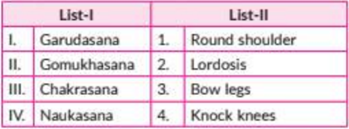
Choose the correct option from the following:
(a) I – 3, II – 4, III – 1, IV – 2
(b) I – 1, II – 3, III – 4, IV – 2
(c) I – 4, II – 2, III – 1, IV – 3
(d) I – 2, II – 3, III – 4, IV – 1
View AnswerAns. (a) I – 3, II – 4, III – 1, IV – 2
3. What is the name of the postural deformity caused due to increase in the curve at the lumbar region?
(a) Knock Knees
(b) Bow legs
(c) Kyphosis
(d) Lordosis
View AnswerAns. (d): Lordosis
4. Which postural deformity has Convexities right or left?
(a) Flat Foot
(b) Knock Knees
(c) Kyphosis
(d) Scoliosis
View AnswerAns. (d): Scoliosis
5. Which of the following is not a spinal curvature deformity?
(a) Kyphosis
(b) Scoliosis
(c) Lordosis
(d) Flatfoot
View AnswerAns. (d): Flatfoot
6. Which postural deformity is related to Posterior curve of the spine?
(a) Scoliosis
(b) Kyphosis
(c) Lordosis
(d) Knock Knees
View AnswerAns. (b): Kyphosis
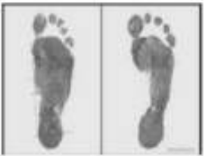
7. Which exercise should be done to cure this deformity?
(a) Skipping
(b) Walking on heels
(c) Both (a) and (b)
(d) Hanging on horizontal bar
View AnswerAns. (c): Both (a) and (b)
8. Halasana is used for curing which of the following deformities?
(a) Kyphosis
(b) Scoliosis
(c) Lordosis
(d) Flatfoot
View AnswerAns. (c): Lordosis
9. Match the postural deformities with their remedial activity:
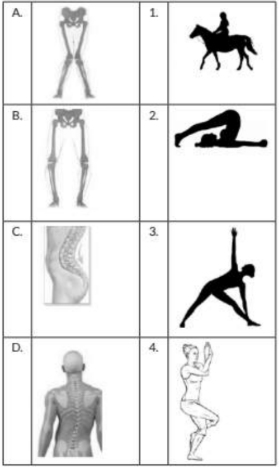
(a) A – 3, B – 1, C – 4, D – 2
(b) A – 3, B – 1, C – 4, D – 2
(c) A – 3, B – 1, C – 4, D – 2
(d) A – 3, B – 1, C – 4, D – 2
View AnswerAns. (c) A – 3, B – 1, C – 4, D – 2
10. Two statements are given below marked as Assertion (A) and Reason (R). Choose the correct alternative on the basis of these statements.
Assertion (A): Physical activities as corrective measure are very effective in functional deformity in comparison to structural deformity.
Reason (R): Muscles and ligaments are affected in functional deformity.
(a) Both (A) and (R) are true, but (R) is the correct explanation of (A)
(b) Both (A) and (R) are true, but (R) is not the correct explanation of (A)
(c) (A) is true, but (R) is false
(d) (A) is false, but (R) is true
View AnswerAns. (b): Both (A) and (R) are true and (R) is the correct explanation of (A).
11. Sandy is diagnosed with postural adaption of the spine in lateral direction. The curve is identified as convexity right. It happened due to Sandy’s underdeveloped legs and carrying heavy loads on one side only.
What kind of postural deformity doctors found in Sandy?
(a) Scoliosis
(b) Kyphosis
(c) Bow legs
(d) Flatfoot
View AnswerAns. (a): Scoliosis
12. Posture plays a very significant role in our daily activities. Correct posture means the balancing of the body in an accurate and proper manner. Various types of postural deformities can be identified in individuals.
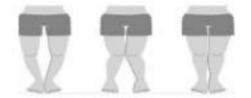
From the above given picture, the deformities seen on the left most is caused due to deficiency of which nutrient?
(a) Iron
(b) Calcium
(d) Vit D
(d) Both (b) and (c)
View AnswerAns. (d): Both (b) and (c)
13. Design a free hand four exercises programme for curing Round Shoulders
View AnswerAns. Free hand exercises to cure round shoulders:
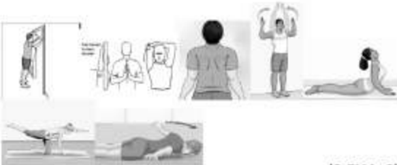
14. Define spinal curvature deformities and list their causes and precautions.
View AnswerAns. The spine, or backbone, is made up of small bones (vertebrae) stacked along with discs – one on top of another. A healthy spine when viewed from the side has gentle curves to it. The curves help the spine absorb stress from body movements. Seen from the back, the spine should run straight down the middle of the back. When abnormalities in the spine occur, the natural curvatures of the spine get misaligned or exaggerated in certain areas. There are three main types of spine curvature disorders:
Kyphosis: Kyphosis is characterised by an abnormally rounded upper back (more than 50 degrees of curvature).
Lordosis: Also called swayback, the spine of a person with lordosis curves significantly inward at the lower back.
Scoliosis: A person with scoliosis has a sideways curve to their spine. The curve is often S-shaped or C-shaped.
Some forms of abnormal kyphosis can be prevented. Postural kyphosis, for example, is entirely dependent on posture, so maintenance of good posture, can prevent this type of kyphosis from developing.
Kyphosis caused by osteoporosis and spinal fractures is also preventable. You need to keep your bones strong and healthy to avoid osteoporosis. This requires intake of calcium and vitamin D rich food and adequate physical activities.
Some yoga poses gradually reduce excessive kyphosis. The most valuable poses to include are supported backbends, which stretch out shortened chest and abdominal muscles and the front spine ligaments.
The following conditions can cause lordosis:
(a) Achondroplasia: A disorder in which bones do not grow normally, resulting in the short stature associated with dwarfism.
(b) Spondylolisthesis: A condition in which a vertebra, usually in the lower back, slips forward.
(c) Osteoporosis: A condition in which vertebrae become fragile and can be easily broken (compression fractures).
(d) Obesity, or being extremely overweight.
(e) Kyphosis: A condition marked by an abnormally rounded upper back.
(f) Discitis: Inflammation of the disc space between the bones of the spine most often caused by infection.
The principle causes of lordosis are bad posture, lack of exercise, and obesity. When we sit a lot continuously, our hip flexors tend to shorten; as a result, it pulls the pelvis forward. In the same way, excess fat of the belly will pull the pelvis to the front, and it also makes the pelvis tilt. Lordosis caused by osteoporosis, severe scoliosis, spondylolisthesis, and ankylosing spondylitis, may benefit from the therapeutic use of these exercises or poses, but in every case the must be started after consulting a medical professional.
Most cases of scoliosis are mild, but some children develop spine deformities that continue to get more severe as they grow. Severe scoliosis can be disabling. A special severe spinal curve can reduce the amount of space within the chest, making it difficult for the lungs to function properly.
15. Weakening of bones due to loss of bone density and improper bone formation is known as ____________
(a) Amenorrhea
(b) Anorexia Nervosa
(c) Osteoporosis
(d) Lordosis
View AnswerAns. (c): Osteoporosis